7 Best Alternatives to a Wholesale Apparel Catalog for Buyers

7 Best Alternatives to a Wholesale Apparel Catalog for Buyers
A traditional wholesale apparel catalog—whether a printed booklet or a static PDF—is no longer the most efficient way to source clothing at scale. Buyers actively replacing their current wholesale apparel catalog are moving toward dynamic B2B platforms, managed sourcing partnerships, and localized digital storefronts that offer real-time inventory, lower minimum order quantities (MOQ), and verified supplier data. If your current catalog lacks multilingual support, transparent pricing, or factory-level vetting, you are likely overpaying or risking quality inconsistencies on repeat orders.
Why Look for Alternatives to a Wholesale Apparel Catalog?
Static catalogs freeze your purchasing options in time. A printed or basic PDF wholesale apparel catalog locks you into the styles, prices, and MOQs that were accurate the day it was published. By the time you place an order three weeks later, factories may have changed fabric suppliers, altered lead times, or adjusted pricing due to raw material fluctuations. For overseas buyers and DTC store owners, this lag creates costly mismatches between what you ordered and what arrives at your warehouse.
Support and communication present another major friction point. When you buy through a generic catalog, you are often left to negotiate directly with a sales representative who may not speak your language fluently or understand your market's specific compliance requirements. This is particularly true when sourcing from China, where navigating factory communications without a dedicated partner can turn a simple sample request into a weeks-long delay. You end up gambling on marketplace listings rather than working with shortlisted, vetted manufacturers.
Scale limits and lock-in further restrict growth. Many traditional catalogs force you into rigid tiered pricing structures that only benefit massive distributors. Smaller importers, online creators, and growing retail brands find themselves priced out of the best margins because they cannot meet the catalog’s blanket MOQ requirements. Furthermore, if that catalog is tied to a single distributor, you lack the leverage to compare factory-direct pricing or pivot quickly when supply chain disruptions hit.
What to Look for in a Wholesale Apparel Catalog Alternative
Before switching your sourcing method, evaluate potential replacements against these procurement criteria to ensure they actually solve the limitations of a static catalog:
- Verified Supplier Vetting: Does the alternative actively check factories, or just list them? Look for platforms or partners that conduct physical audits rather than relying on self-reported profiles.
- Dynamic MOQ and Price Negotiation: You need a system that allows you to negotiate terms based on your actual volume, rather than accepting fixed catalog tiers.
- Multilingual Localization: If you are selling globally, your sourcing tool should support multiple languages natively—including right-to-left layouts for Arabic markets—not just machine-translated English text.
- Sample Coordination: The ability to easily request, track, and approve physical samples before committing to a full production run.
- Real-Time Inventory Accuracy: Ensure the alternative pulls from the factory’s actual in-stock catalogue so you aren't sold items that require months of new production.
- Commission or Fee Transparency: Understand exactly how the platform makes money. Hidden markups erode the margin advantages of buying direct.
- Repeat Order Management: A good alternative streamlines reordering past successful runs without forcing you to restart the entire negotiation process.
For a deeper breakdown of evaluation metrics, review our guide on Wholesale Catalogs for Clothing: How Serious Buyers Source at Scale. If your product mix extends beyond garments, applying these same principles to apparel accessories wholesale sourcing ensures consistent quality across your entire catalog.
Top Alternatives to a Wholesale Apparel Catalog
1. Link4a (Managed Sourcing Partnership)
Best for: Overseas buyers, importers, and DTC store owners who want a dependable sourcing partner in China instead of gambling on unvetted marketplace listings.
Pricing: Commission charged only on closed orders; no upfront fees for buyers. Factory partners also operate on a commission-only entry model, paying nothing before an order closes.
Key strengths vs wholesale apparel catalog:
- Actively shortlists and vets Chinese factories, negotiates MOQ and price, coordinates samples, and handles repeat orders on your behalf.
- Provides factories with a managed overseas storefront in six languages, complete with weekly SEO content per market and buyer conversations handled entirely by the Link4a team.
- Replies to buyers are drafted directly from the factory's actual in-stock catalogue, eliminating the phantom inventory common in outdated catalogs.
- Uses verifiable ranking rather than empty promises: product pages built for client stores have demonstrated strong organic search visibility in target markets, with queries published on their homepage.
Limitations / trade-offs:
- Not a self-serve "add to cart" platform; requires a collaborative partnership approach.
- Primarily focused on China-based manufacturing, which may not suit buyers exclusively seeking domestic US or European production.
How it compares to wholesale apparel catalog: A traditional wholesale apparel catalog hands you a list and wishes you luck. Link4a replaces that passive document with an active managed export operator. Instead of deciphering a static PDF, buyers get multilingual communication, per-language keyword research (rather than translated English posts), and localized pages—including proper right-to-left Arabic formatting. For Chinese factory owners, it replaces the need to hire an expensive export sales team to get their catalogue sold overseas. It shifts the dynamic from browsing to procuring.
2. Faire (B2B Wholesale Marketplace)
Best for: Independent boutiques and small DTC brands looking for low-risk discovery across thousands of global apparel makers.
Pricing: Free for retailers to browse and buy; brands pay a commission on initial orders (often around 15% as of recent standard terms) and lower rates on reorders.
Key strengths vs wholesale apparel catalog:
- Offers net-60 payment terms for qualified buyers, easing cash flow compared to the upfront wire transfers usually demanded by traditional catalog suppliers.
- Features a centralized return policy for first-time orders with new brands, drastically reducing the risk of trying untested apparel lines.
- Aggregates thousands of independent brands into one searchable interface, replacing the need to collect dozens of individual brand catalogs.
Limitations / trade-offs:
- Pricing includes marketplace commissions, meaning you rarely get true factory-direct margins.
- Quality control is decentralized; Faire does not physically inspect the garments before they ship to you.
How it compares to wholesale apparel catalog: Faire digitizes the catalog experience but adds financial safety nets that paper or PDF catalogs completely lack. While a standard wholesale apparel catalog forces you to trust the supplier blindly regarding quality and delivery, Faire introduces buyer protection and flexible payment terms. However, for high-volume importers needing deep factory integration, Faire remains a retail-facing marketplace rather than a true supply-chain management tool.
3. Royal Apparel (Direct Manufacturer B2B Portal)
Best for: US-based businesses requiring domestically manufactured basics, activewear, and promotional apparel with fast turnaround.
Pricing: Tiered wholesale pricing visible upon account approval; generally higher per-unit cost than Asian imports but offset by lower shipping and zero import duties.
Key strengths vs wholesale apparel catalog:
- Live B2B portal allows for real-time inventory checks, unlike a static catalog that might list out-of-stock items.
- Focuses heavily on Made-in-USA production, appealing to brands whose marketing relies on domestic manufacturing claims.
- Consolidated shipping from local warehouses eliminates the 30-to-60-day ocean freight windows associated with international catalog orders.
Limitations / trade-offs:
- Limited strictly to Royal Apparel’s own production capabilities; you cannot use it to source diverse styles from multiple factories.
- Higher baseline unit costs compared to sourcing equivalent blanks from China.
How it compares to wholesale apparel catalog: Royal Apparel takes the concept of a single-brand wholesale apparel catalog and modernizes it into a live e-commerce engine. Where a traditional catalog leaves you guessing about stock levels, their B2B portal provides immediate visibility. The trade-off is flexibility: you are locked into one manufacturer's ecosystem rather than using a sourcing partner to access a network of specialized factories.
4. Apparel Globe (Digital Sourcing Directory)
Best for: Mid-sized buyers searching for specific garment categories (like T-shirts or outerwear) across a broad directory of global suppliers.
Pricing: Typically free for buyers to browse; suppliers pay listing or membership fees.
Key strengths vs wholesale apparel catalog:
- Filterable by exact product type, allowing buyers to bypass irrelevant pages that clutter traditional printed catalogs.
- Connects buyers with a wider geographic spread of manufacturers beyond a single region.
- Digital format allows for rapid updating of supplier profiles and contact information.
Limitations / trade-offs:
- Functions primarily as a directory; it does not manage the transaction, negotiate MOQs, or handle logistics for you.
- Supplier verification is often limited to documentation provided by the factory itself, requiring buyers to do their own due diligence.
How it compares to wholesale apparel catalog: Apparel Globe acts as a search engine for the kind of information traditionally trapped inside a wholesale apparel catalog. Instead of flipping through pages hoping a supplier makes the specific activewear line you need, you filter by category. However, it stops at introductions. Unlike a managed sourcing service, it doesn’t step in to coordinate samples or negotiate pricing, leaving the heavy lifting to the buyer.
5. The Park Wholesale (Distributor Catalog Platform)
Best for: Retailers and screen printers needing immediate access to bulk blank apparel from established name brands like District.
Pricing: Standard distributor wholesale pricing; volume discounts apply automatically at checkout based on cart size.
Key strengths vs wholesale apparel catalog:
- Instant checkout capability removes the back-and-forth quoting process inherent in traditional catalog ordering.
- Carries multiple major brands under one roof, saving buyers from managing relationships with five different brand representatives.
- Highly optimized for domestic US fulfillment, ensuring fast restocking for print-on-demand or local retail operations.
Limitations / trade-offs:
- You are buying from a distributor, not the factory, meaning margins are compressed compared to direct sourcing.
- Custom manufacturing or private labeling is generally not available; you are restricted to existing brand SKUs.
How it compares to wholesale apparel catalog: The Park Wholesale represents the evolution of the distributor's wholesale apparel catalog into a frictionless e-commerce site. It solves the speed problem—orders are placed in minutes rather than days—but it sacrifices customization. If your goal is to develop unique garments with specific fabrics and fits, a distributor platform won't work. If you just need 500 blank District t-shirts by Friday, it beats any traditional catalog.
6. Alibaba (Global Trade Marketplace)
Best for: High-volume importers willing to manage their own supplier vetting, quality control, and logistics to secure the lowest possible unit cost.
Pricing: Free to browse; pricing is negotiated directly with suppliers. Platform fees apply via Trade Assurance transactions.
Key strengths vs wholesale apparel catalog:
- Unmatched scale, connecting buyers with virtually every type of manufacturer operating in Asia and beyond.
- Trade Assurance offers a layer of payment protection that mailing a check to a catalog supplier never could.
- RFQ (Request for Quotation) tools allow buyers to broadcast their needs to multiple factories simultaneously.
Limitations / trade-offs:
- Extreme variance in supplier quality; the burden of verifying factories, checking certifications, and avoiding scams falls entirely on the buyer.
- Communication barriers and time zone differences frequently stall sample approvals and production updates.
How it compares to wholesale apparel catalog: Alibaba is the antithesis of a curated wholesale apparel catalog. Where a catalog limits your options to a pre-selected few, Alibaba gives you millions of choices with very little initial filtering. It is a powerful global trade tool, but it operates as a wild west compared to managed sourcing. Buyers transitioning from a trusted catalog to Alibaba often experience whiplash unless they bring in third-party inspection services or sourcing agents to validate the suppliers they find.
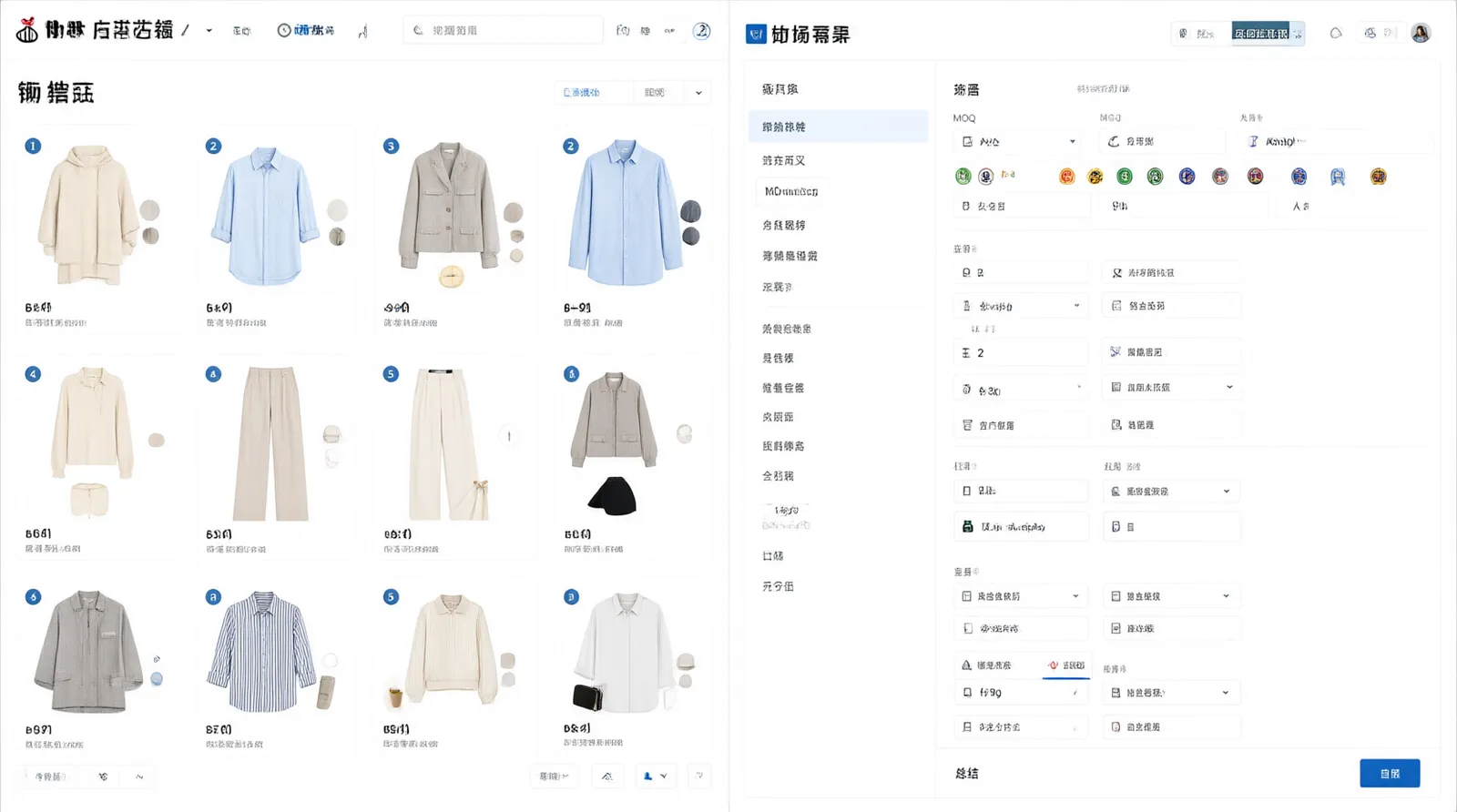
7. Sky Sportswear (Niche Brand Portal)
Best for: Fitness brands, gyms, and athletic retailers specifically sourcing performance wear and activewear.
Pricing: Direct wholesale pricing tiers based on order volume; custom quotes required for branded team wear.
Key strengths vs wholesale apparel catalog:
- Hyper-focused inventory means every item listed is relevant to the athletic niche, eliminating the noise of general apparel catalogs.
- Specialized knowledge in technical fabrics (moisture-wicking, compression) ensures the products match the performance claims.
- Streamlined reordering for teams and gym franchises that need consistent uniform batches season after season.
Limitations / trade-offs:
- Useless if your business requires casual wear, formal attire, or non-athletic fashion categories.
- As a single-brand portal, you cannot compare their pricing against competing activewear factories within the same interface.
How it compares to wholesale apparel catalog: Sky Sportswear takes the traditional wholesale apparel catalog model and narrows it down to a single, highly profitable vertical. Instead of wading through pages of irrelevant basics to find activewear, buyers get a targeted portal. It improves upon the old catalog format through better digital organization, but it still lacks the cross-factory negotiation power that a broader sourcing strategy provides. Brands expanding their product lines beyond clothing often apply this same targeted sourcing logic when evaluating custom jewelry alternatives to avoid being locked into overly broad supplier networks.
Side-by-Side Comparison Table
| Feature / Dimension | Traditional Wholesale Apparel Catalog | Link4a | Faire | Royal Apparel | Apparel Globe | The Park Wholesale | Alibaba | Sky Sportswear |
|---|---|---|---|---|---|---|---|---|
| Supplier Vetting | Self-reported by brand | Managed & verified by partner | Decentralized (buyer beware) | Single manufacturer | Directory-based, self-reported | Distributor-vetted brands | Buyer must verify manually | Single manufacturer |
| MOQ Flexibility | Rigid, printed tiers | Negotiated per order | Generally low, set by brand | Set by manufacturer | Varies by listed supplier | Low, set by distributor | Highly variable, negotiated | Volume-based tiers |
| Localization | Usually English only | 6 languages, native RTL support | English primary + some EU | English | English primary | English | Multi-language UI, poor translation | English |
| Inventory Accuracy | Outdated upon printing | Pulled from actual factory stock | Real-time via platform | Real-time via portal | Relies on supplier updates | Real-time via distributor | Relies on supplier updates | Real-time via portal |
| Pricing Model | Fixed wholesale | Commission on closed orders | Markup/commission on brand | Direct wholesale | Free to browse, supplier pays | Distributor wholesale | Negotiated direct | Direct wholesale |
| Sample Handling | Manual coordination | Coordinated by sourcing partner | Ordered like regular items | Ordered via portal | Arranged directly with supplier | Ordered like regular items | Arranged via chat/messaging | Ordered via portal |
How to Pick the Right Alternative
Choosing a replacement for your current wholesale apparel catalog depends entirely on your operational maturity and order volume.
If you are a small boutique testing new styles, prioritize platforms with built-in financial protections and low minimums. Marketplaces like Faire allow you to order small batches with net-60 terms, removing the financial peril of buying untested inventory from a static catalog. You sacrifice some margin, but you buy peace of mind.
If you are a mid-sized importer or DTC brand owner scaling up, you need more than a directory—you need infrastructure. This is where managed sourcing partners like Link4a replace the catalog entirely. Instead of reading a PDF and hoping the factory delivers, you hand over your specifications. They shortlist the factories, check them, negotiate the MOQ and price, coordinate the samples, and handle the multilingual communication. This is especially critical when sourcing from China, where the gap between a catalog photo and actual production quality can be vast. For Chinese factory owners, partnering with a managed export operator means getting your catalogue sold overseas in six locales without hiring an internal sales team.
If you require absolute speed and domestic reliability for basic blanks, direct manufacturer portals like Royal Apparel or distributor platforms like The Park Wholesale are your best bet. They function as hyper-efficient, single-source catalogs with live inventory data, ideal for screen printers or promotional distributors who cannot wait for ocean freight.
Finally, if you have an internal procurement team capable of auditing factories, managing logistics, and handling quality control, mega-marketplaces like Alibaba offer the widest net. Just remember that you are replacing the curation of a catalog with raw, unfiltered access.
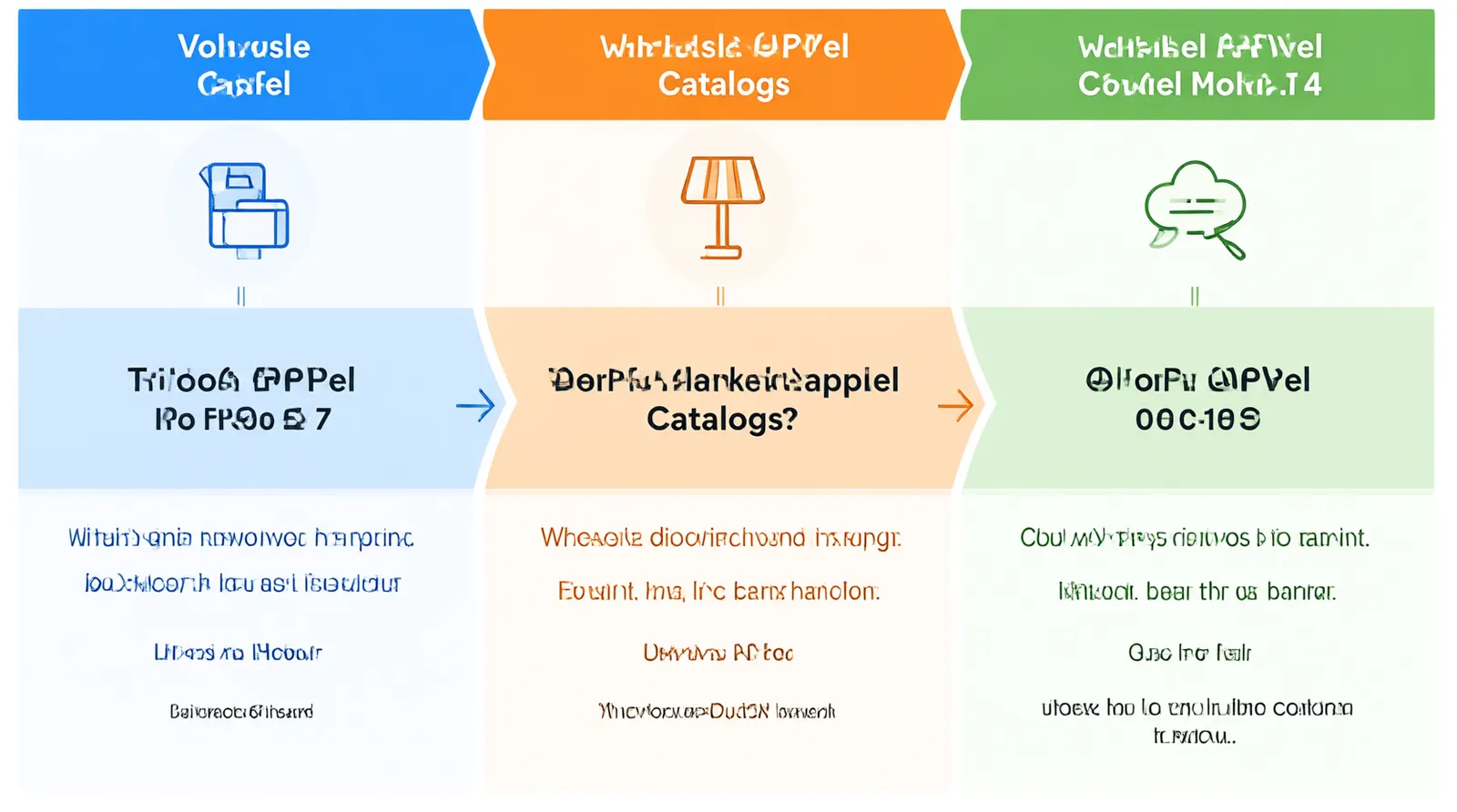
To understand how managed partnerships specifically drive international revenue, explore our breakdown of Wholesale Apparel Catalogs: How China Sourcing Partners Drive Global Sales.
Conclusion
Relying on a static wholesale apparel catalog leaves money on the table and exposes your supply chain to unnecessary risks. The right alternative aligns with your specific procurement bottlenecks. Small shops should lean toward protected marketplaces like Faire. Domestic blank buyers should use live portals like Royal Apparel or The Park Wholesale. But if you are importing at scale, developing custom lines, or a factory trying to reach overseas buyers without building an export department, a managed sourcing partnership is the definitive upgrade.
Stop flipping through outdated pages and hoping for the best. If you are ready to replace your current catalog process with a vetted, multilingual sourcing operation that negotiates directly with factories on your behalf, request a quote and get current MOQ and pricing details at Link4a.