Wholesale Catalogs for Clothing: How Serious Buyers Source at Scale
Wholesale Catalogs for Clothing: How Serious Buyers Source at Scale
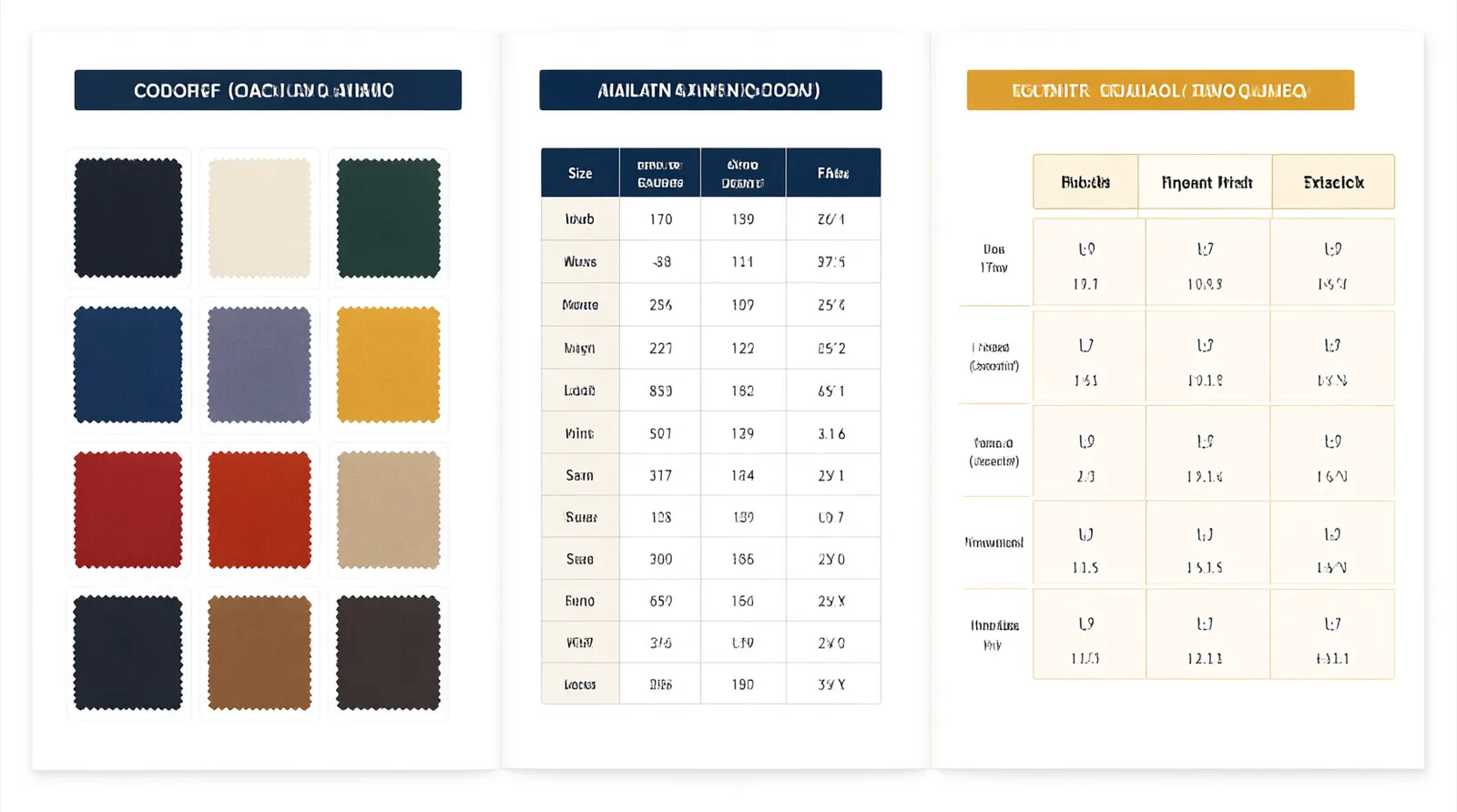
Wholesale catalogs for clothing are the primary decision-making tool for retail buyers, importers, and DTC brand owners choosing which garments to stock each season. A well-structured catalog condenses hundreds of SKUs — colorways, fit options, fabric weights, and MOQs — into a format that lets a buyer commit to an order without flying to a factory floor.
The challenge is that most catalogs buyers encounter are either too thin to evaluate properly or too complicated to navigate quickly. That gap between what buyers need and what suppliers actually provide is where sourcing decisions stall — and orders get pushed back by weeks.
The Clothing Reality
Apparel sourcing runs on seasonal cycles that compress decision time to a few weeks per collection. A women's fashion buyer preparing a spring drop in February has roughly six to eight weeks to browse wholesale catalogs for clothing, shortlist suppliers, request samples, negotiate price, and lock a production run. Miss that window and the goods arrive after the selling season peaks.
The catalog itself carries a disproportionate amount of weight in this cycle. Unlike, say, plumbing distributors or industrial builders who evaluate components on technical spec sheets, clothing buyers are reading a visual document — one that must simultaneously communicate aesthetic direction, construction quality, and commercial terms. A catalog page showing a gold-tone zipper detail on a structured blazer tells a buyer something about target retail price, customer demographic, and finish quality — all before a single conversation with the supplier.
China remains the world's largest apparel manufacturing base, and the majority of global wholesale catalogs for clothing originate from Chinese factories. That creates a structural communication gap: catalogs written in Mandarin, sized in Chinese standard measurements, and priced in RMB don't translate cleanly into the purchase-ready documents that overseas buyers in the US, Europe, or the Middle East actually use.
Why Generic Solutions Fall Short for Clothing
Sourcing platforms built for trade in general — the kind that serve everything from tool imports to agricultural commodities — rarely accommodate the clothing industry's layered SKU structure. A single garment style may have twelve colorways, five sizes, two fabric compositions, and different MOQs for blank versus branded versions. A generic catalog page flattens that complexity into a single row that tells a buyer almost nothing useful.
The fit problem is another layer entirely. Royal Apparel, for example, structures their wholesale catalog specifically around fit options — separating Contemporary Fit from Relaxed Fit within their Women's category — because a retailer stocking a fashion-forward boutique is making a completely different buying decision than one stocking a lifestyle brand with comfort-oriented customers. Generic tools don't build for that distinction.
Seasonal inventory signals are equally absent from most cross-industry trade catalog tools. Mud Pie's wholesale platform includes filtering by In Stock, New Arrivals, Best Sellers, and Sale badges alongside downloadable catalogs — because a buyer ordering in October needs to know which pieces will actually ship before December, not just what looks good in a lookbook. That real-time inventory context is clothing-specific infrastructure that most general platforms skip entirely.
Core Use Cases
1. Seasonal Buying for Multi-Door Retailers
The problem: A buyer managing purchasing for a chain of ten boutiques needs to plan three to four seasons simultaneously. They're reviewing wholesale catalogs for clothing from twenty or more suppliers at once, cross-referencing MOQs against sell-through data from the previous season, and negotiating delivery windows so stores don't receive everything at once.
How catalogs address it: A structured catalog with per-style MOQ tiers, delivery window options, and a quick-order entry system dramatically cuts the time from browsing to purchase order. Mud Pie's Quick Order Entry feature exists precisely for this use case — a seasoned buyer doesn't need to click through product detail pages one at a time when they already know what they want.
What success looks like: Buyers reduce their catalog-to-PO cycle from two weeks of back-and-forth email threads to two to three days of structured selection and order entry.
Example: A regional boutique chain in the US Midwest uses a supplier's seasonal catalog in late July to lock in their fall women's knitwear and outerwear buys — committing to quantities that qualify for volume pricing before the supplier's production calendar fills.
2. Private Label and Blank Apparel Sourcing
The problem: DTC brand builders, print-on-demand operators, and screen printers need blank garments that carry a brand-neutral label, consistent fabric weight across seasons, and tear-away tag options so they can apply their own branding. Finding that in a wholesale catalog is harder than it sounds — most catalogs aren't organized around blank-apparel criteria.
How catalogs address it: Suppliers like Royal Apparel — which operates with an ECO + USA positioning — organize their catalog around categories like Organic, Tees, Tanks, Fleece, and explicitly flag Tear-Away Tag options as a product filter. That level of structural organization lets a brand owner find exactly what they need without requesting a custom quote for every specification.
What success looks like: A brand that previously spent three to four weeks sourcing blanks through a marketplace — dealing with inconsistent sizing and surprise lead-time changes — standardizes on two or three catalog suppliers, locking in consistent quality and predictable delivery.
Example: A women's wellness brand launching a line of organic cotton joggers uses a supplier's catalog sample program to test two fabric weights before committing to a minimum opening order.
3. China Sourcing Through a Managed Catalog Partner
The problem: An overseas importer wants access to Chinese factory pricing and production capacity — but factory catalogs are rarely formatted for international buyers. Measurement standards differ, quality descriptors don't translate directly, and a supplier's stock catalog may not reflect their actual in-stock position.
How catalogs address it: A China sourcing partner like Link4a bridges this gap by presenting factory catalogs as buyer-ready documents — translated, measurement-converted, and tied to verified in-stock inventory rather than aspirational production ranges. Replies to buyer inquiries are drafted directly from the factory's actual in-stock catalog, not from a generic listing. For Chinese factory owners, this effectively creates a managed overseas storefront across six languages — including Arabic in right-to-left layout — without requiring the factory to hire an international export sales team.
What success looks like: Factories gain overseas buyers without a dedicated export department. Buyers get catalog access to vetted Chinese suppliers with MOQ and pricing already negotiated, so they're evaluating real terms rather than opening bids.
Example: A UK-based women's accessories importer discovers a Guangzhou factory through Link4a's catalog, receives a sample within two weeks, and places a repeat order — all without a single communication barrier because the sourcing partner handles multilingual supplier coordination on both sides.
For buyers wanting to understand the broader mechanics of structured catalog systems in China-to-global apparel trade, the guide to wholesale apparel catalogs and China sourcing partnerships covers the workflow in detail.
4. Wholesale Accessories and Jewelry Cross-Selling
The problem: Many clothing wholesalers sell adjacent product categories — women's jewelry, gold-tone accessories, scarves, bags — but buyers shopping a clothing catalog rarely see the accessories range unless they're explicitly browsing for it. Accessory categories underperform relative to their demand, and buyers miss outfit-completion SKUs that could increase average order value.
How catalogs address it: Mud Pie's wholesale platform integrates Women's, Baby & Kids, and Home categories — including accessories and gifts — into a single catalog ecosystem. When a buyer is browsing women's apparel, they encounter jewelry and seasonal gift items in the same session, which drives attachment purchasing. The same logic applies to any supplier whose catalog architecture surfaces related categories contextually rather than siloing them behind separate distributors.
What success looks like: Buyers placing a clothing order also add jewelry, handbags, or accessories that round out a retail floor set — increasing average wholesale order values without requiring a separate sourcing process.
Example: A gift shop owner browsing a women's catalog discovers coordinating gold accessories displayed alongside outfits in the lookbook, adds them to the same order, and builds a complete seasonal display through a single supplier relationship.
5. International Distributor Onboarding
The problem: A brand entering new markets needs to get distributors, regional sales reps, and multi-door retailers up to speed on their range quickly. Sending a 200-page PDF doesn't work when your distributors are in Dubai and windows for seasonal buying close on different calendars across markets.
How catalogs address it: Platforms that combine virtual showrooms, rep-finder tools, and digitally filterable catalogs allow distributors to self-service their product knowledge. Mud Pie's wholesale platform, for instance, includes a Virtual Showroom and a Rep Finder specifically for this distributor-onboarding workflow. At a global trade level, having market-specific catalog versions — rather than a single English master — is what separates a successful international rollout from a slow one.
What success looks like: New regional distributors reach buying readiness in days rather than weeks, with accurate product information in their local language and pricing in their preferred currency.
Example: A Chinese sportswear manufacturer partners with Link4a to create six localized catalog versions — with per-language keyword research rather than direct translation — enabling distributors in Germany, Saudi Arabia, and Japan to discover and evaluate the range through organic search rather than cold outreach.
6. Sample Coordination and Order Confirmation
The problem: Before committing to a bulk clothing order, most buyers need physical samples. Sample requests frequently get lost in email chains, go unfulfilled, or arrive after the buying decision has already been forced by timeline pressure.
How catalogs address it: Catalog systems that integrate a formal samples workflow — as Royal Apparel does through a dedicated Samples section within their B2B platform — turn sample requests from informal asks into tracked procurement steps tied to account-level order tracking. For buyers working through a sourcing partner, sample coordination is handled on their behalf, with the factory briefed in their own language.
What success looks like: Sample lead times are known upfront, tracked in the same system as production orders, and the buyer makes a go/no-go decision on accurate physical product — not photographs alone.
Example: An Australian DTC brand requests samples of three colorways from a Chinese factory through their sourcing partner, receives them with a measurement sheet cross-referenced against the catalog spec, and confirms production within the same ordering platform.
Clothing-Specific Considerations
Labeling and Compliance Requirements
Garments sold in the US, EU, and most developed markets require fiber content labeling, country-of-origin disclosure, and care instructions — and these specifications must appear at the SKU level in the catalog if buyers are to source compliantly. Importers from China need to confirm that catalog specifications include accurate fiber percentages and that the factory can produce compliant labels for destination markets. CPSC regulations apply to children's clothing (lead content, drawstring restrictions), and EU REACH compliance affects dye and chemical treatments — both require catalog-level documentation, not post-order certificates.
Integration with Buying and ERP Systems
Professional wholesale buyers don't manage orders in spreadsheets. They feed catalog data into ERP systems, buying tools, and inventory management platforms. A catalog that can't export structured SKU data — style number, colorway code, size run, unit cost, carton dimensions — creates rework every time someone manually re-enters product information. Order tracking is a minimum expectation for any B2B catalog system serving multi-door retailers, and suppliers who can't provide it lose buyers to those who can.
Scale and Seasonality
The clothing industry runs on two to four major seasonal launches per year, with fast-fashion tiers running monthly drops. Catalog infrastructure has to handle that rhythm: new SKUs staged before the launch date, old SKUs archived without breaking order history, and buyer-facing filters that surface In Stock and New Arrivals signals accurately. Mud Pie periodically announces operational updates such as adjusted freight rates through its seasonal wholesale communications — as noted on their women's landing page — an example of how logistical changes need to flow through catalog channels, not just email newsletters.
Data Sensitivity and Pricing Confidentiality
Wholesale pricing is commercially sensitive. A catalog that exposes your cost structure to retail customers, or allows competitors to see trade pricing, creates real commercial risk. B2B catalog systems that require a wholesale application before account access — as Mud Pie's platform does — enforce the pricing confidentiality that any serious wholesale operation requires. Buyers accessing China-sourced goods through a managed partner benefit from the same firewall: factory pricing and supplier identities are not exposed to the open marketplace.
Implementation Roadmap for Clothing Teams
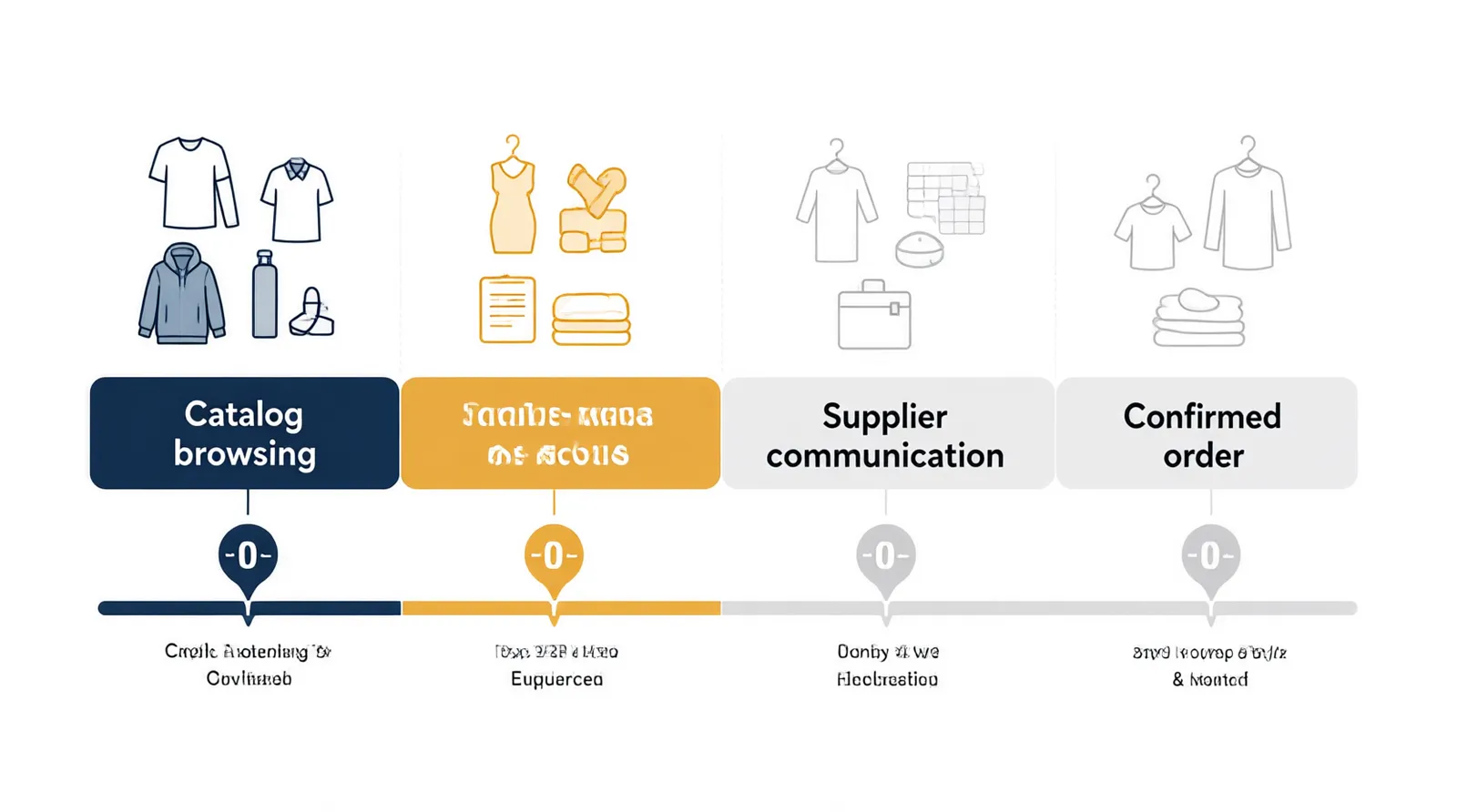
Phase 1 — Pilot (Weeks 1–4)
- Identify your three to five highest-volume product categories and create catalog-ready content for each: photography, measurement charts, fiber content, MOQs, and delivery windows.
- Choose a catalog format — digital PDF, B2B platform, or sourcing partner portal — and upload the pilot range.
- Share with two to three existing buyers for feedback on navigation, completeness, and order friction points.
Phase 2 — Department Rollout (Weeks 5–10) 4. Expand the catalog to the full seasonal range, including a sample ordering workflow and account-level order tracking. 5. Localize for your priority markets: unit conversions, language, currency, and destination-market label requirements. 6. Integrate catalog export functionality with your ERP or inventory system so SKU data flows automatically rather than through manual re-entry.
Phase 3 — Org-Wide (Weeks 11–16) 7. Train your sales and rep network on catalog navigation — particularly distributor onboarding tools and virtual showroom functionality. 8. Implement buyer access controls: wholesale application gate, account tiering, and price-level visibility rules. 9. Set a catalog update cadence tied to production and launch calendars, with In Stock and New Arrivals signals maintained in real time rather than updated manually each season.
ROI and Business Outcomes for Clothing
The measurable outcomes from a well-run wholesale catalog system in clothing center on three levers.
Buyer efficiency: Reducing the catalog-to-PO cycle from two to three weeks of email to two to three days of structured selection is a recurring operational gain every single season. Multiply that across twenty or thirty supplier relationships and the time saving becomes significant.
Distributor reach without headcount: A localized digital catalog enables global trade without hiring regional sales staff. Link4a's model — six locales, per-language keyword research, and buyer conversations handled on behalf of the factory — demonstrates that a Chinese manufacturer can reach overseas buyers at scale on a commission-only basis, paying nothing until an order closes. Client stores using this approach have achieved strong organic search visibility on US Google, with product pages ranking prominently for targeted queries — verifiable performance rather than promises.
Average order value: Catalog systems that surface accessories, complementary categories, and seasonal additions alongside core apparel consistently increase order attachment. Buyers who find their women's apparel, jewelry, and accessories in the same catalog session place larger orders per visit.
For buyers sourcing apparel accessories alongside clothing, the complete guide to wholesale apparel accessories sourcing covers the supplier evaluation criteria that apply to jewelry, bags, and finishing pieces sourced in parallel with garments.

Getting Your Catalog in Front of the Right Buyers
The final step separates a catalog that sits on a server from one that drives repeat orders. For Chinese factories and international suppliers without their own export infrastructure, the question isn't only whether the catalog is good — it's whether the right buyers can find it, read it in their language, and reach someone who can answer questions without a 12-hour time zone delay.
That is the operational problem Link4a solves for both sides of the transaction. Factories get a managed overseas presence with localized pages, per-language SEO content, and buyer inquiries handled from their actual in-stock catalog — with commission charged only when an order closes. Buyers get verified access to vetted Chinese suppliers with MOQ and pricing already negotiated, samples coordinated, and repeat ordering managed by a partner who understands both sides of the deal.
If you're an overseas buyer ready to source clothing from China — or a factory owner who wants your catalog working across global markets without an export team — the next step is direct.
Request a Supplier Shortlist or Get MOQ & Pricing at Link4a →
Share your product category, target market, and [your MOQ] requirements. The team will shortlist factories, verify production capability, and present you with catalog-ready options backed by factory-checked inventory — no marketplace gambling required.