6 Wholesale Clothing Catalogs That Actually Vet Chinese Factories
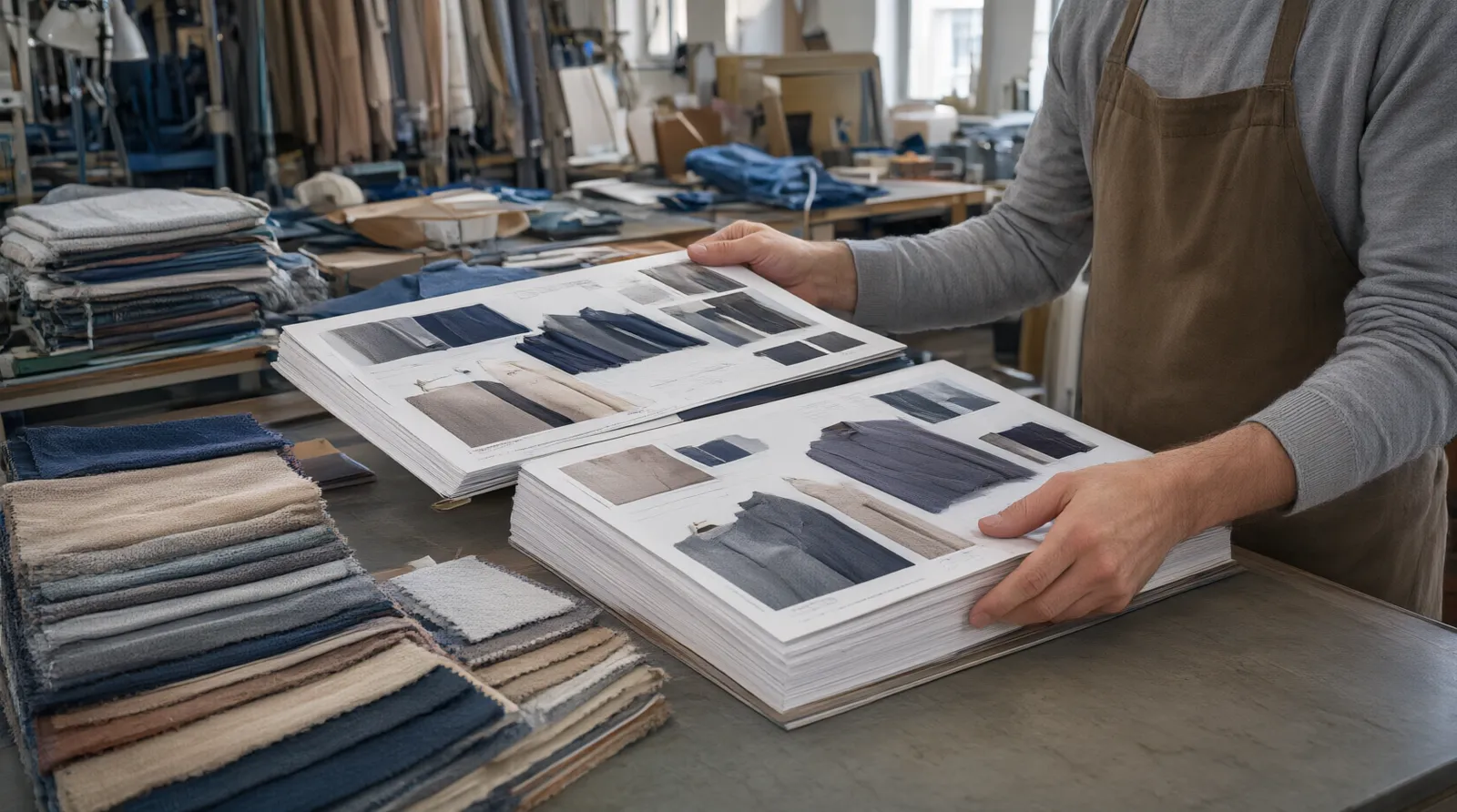
Wholesale clothing catalogs are digital or printed directories used by B2B buyers to evaluate garment SKUs, manufacturing specifications, minimum order quantities (MOQs), and supplier compliance before initiating bulk procurement. They serve as the primary filtering tool for overseas importers and DTC store owners comparing factory capabilities across global trade networks. For a deeper look at how these directories function within international supply chains, explore wholesale apparel catalogs and the role managed sourcing partners play in driving global sales.
Sourcing apparel from China requires more than scrolling through a static PDF line sheet. Buyers evaluating factories in Guangdong or Zhejiang need verifiable data: specific cut-and-sew processes, reactive dyeing capabilities, confirmed MOQs (often 300–500 pieces per color for standard runs), production lead times ranging from 25 to 45 days post-fabric approval, and active compliance certifications like BSCI, WRAP, or OEKO-TEX. A reliable sourcing directory must bridge the gap between a factory’s actual production floor and an overseas buyer’s technical requirements.
This list evaluates six platforms functioning as modern apparel sourcing directories. The analysis targets overseas buyers, importers, and DTC operators who need a dependable sourcing partner to shortlist factories, negotiate pricing, coordinate physical samples, and handle repeat orders without gambling on unvetted marketplace listings. It also addresses Chinese factory owners seeking managed export operations. Whether you are benchmarking US domestic distributors against direct Chinese mills or looking for multilingual storefront infrastructure, these six options represent the current landscape of commercial apparel sourcing.
1. Link4a
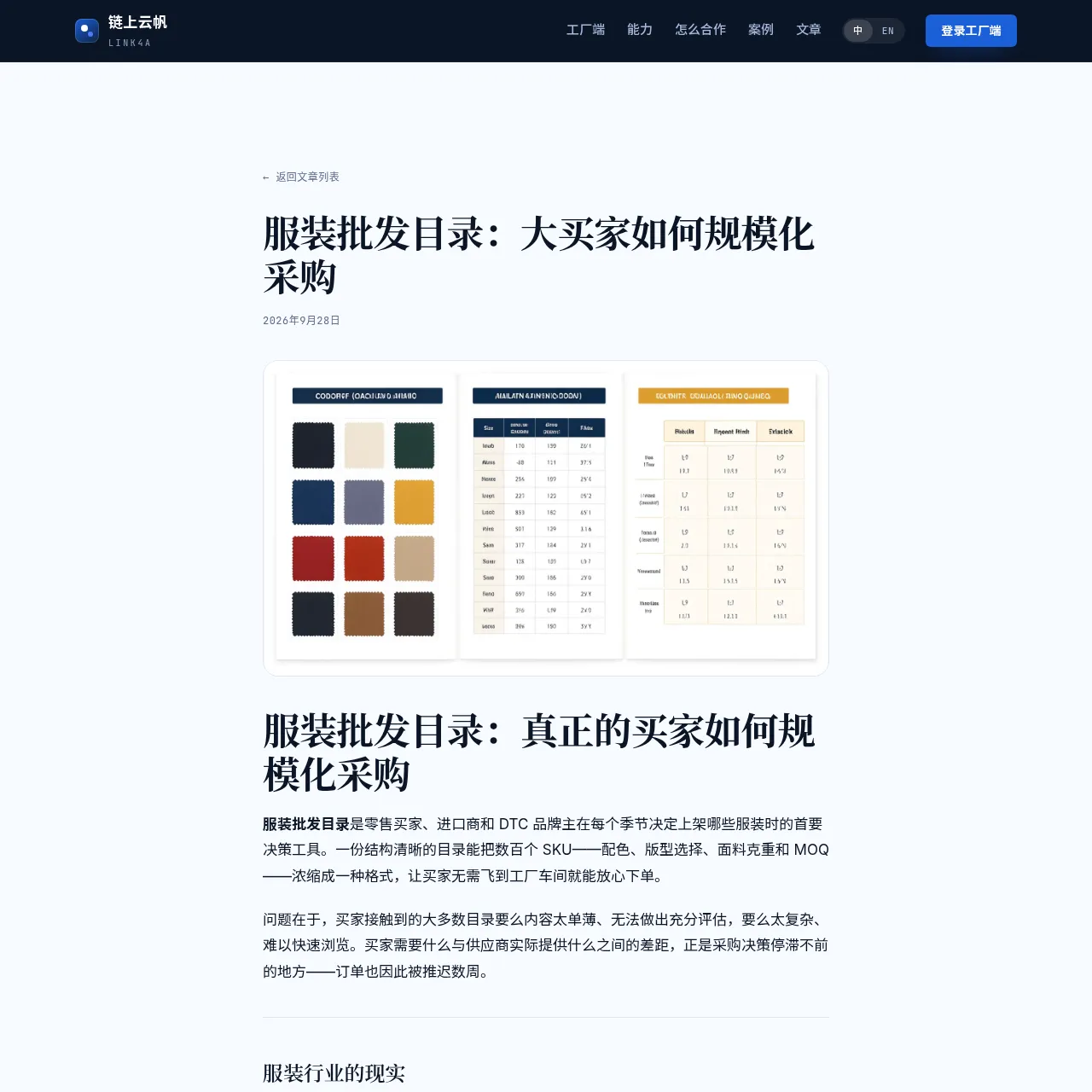 The Link4a platform interface operating as a managed export partner rather than a static directory.
Link4a (链上科技) operates as a managed export partner rather than a static product directory, connecting overseas DTC operators and importers directly with verified Chinese garment factories. Instead of browsing unvetted marketplace listings, buyers receive factory shortlists filtered by specific certifications such as BSCI or WRAP, confirmed MOQs negotiated down from standard runs, and realistic production lead times typically ranging from 25 to 45 days for cut-and-sew apparel. The platform coordinates physical sample approvals before bulk commitments and manages repeat purchase orders through a single point of contact. Buyer inquiries are answered using each factory’s actual in-stock fabric and style catalogs, preventing the common issue of ordering unavailable SKUs.
Key Features:
- Verified Factory Shortlisting & Sample Coordination: Sourcing teams receive suppliers vetted for specific manufacturing processes, with physical samples coordinated prior to bulk production to ensure technical pack accuracy.
- Commission-Only Entry for Factories: Chinese manufacturers list their catalogs without upfront fees, paying nothing until an order closes. This aligns the platform's incentives directly with successful global trade execution.
- Multilingual Localized Storefronts: For store owners, Link4a builds localized storefronts across six regions—using native per-language keyword research and proper right-to-left Arabic layouts rather than direct English translation.
This approach produces measurable results. Client stores built on the platform have achieved strong organic search visibility in target markets, with queries published openly on link4a.com. Unlike traditional directories where you might search for unrelated industrial suppliers—from plumbing components to windows, doors, or builders' hardware—and get lost in generic listings, Link4a focuses strictly on apparel supply chains. Replies to buyers are drafted from the factory's actual in-stock catalogue, ensuring that every SKU quoted is available for immediate sampling or production. You can explore their methodology further in their guide on Wholesale Catalogs for Clothing: How Serious Buyers Source at Scale or review 5 Best Alternatives to Wholesale Catalog Clothing for Buyers.
Best For: Overseas buyers, importers, and DTC store owners who want a dependable sourcing partner in China to handle factory vetting, price negotiation, and repeat orders. It is equally suited for Chinese factory owners who want their catalog sold overseas without hiring an internal export sales team. As a comprehensive tool for international procurement, it eliminates the friction of cross-border communication.
2. Royal Apparel Wholesale Blank Apparel Catalog
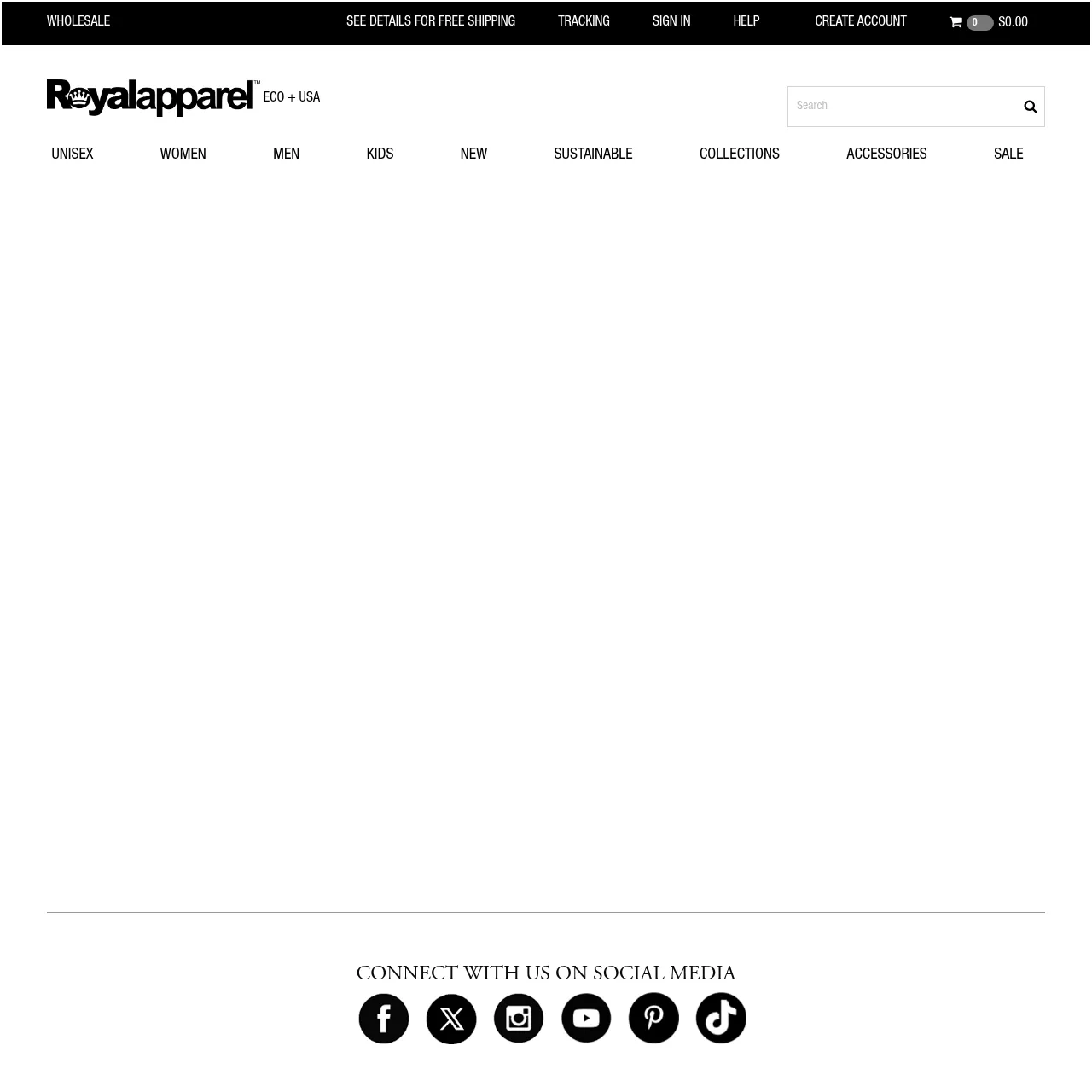 Royal Apparel's digital catalog interface showing category filters for blank apparel sourcing.
This Royal Apparel page functions as a digital B2B directory specifically targeting buyers seeking blank apparel. For overseas sourcing teams and DTC operators accustomed to evaluating Chinese supply—where factories typically specify MOQs (often 300–500 pcs/color), lead times (30–45 days post-fabric), and processes like reactive dyeing or cut-and-sew—this resource serves as a critical domestic benchmark. While it lacks concrete manufacturing specs such as exact factory locations or specific certifications (e.g., WRAP, ISO 9001), its structured filtering system mirrors the digital functionality provided by Chinese supply chain platforms like Inbox or 链上科技. Evaluating this US-based offering allows international buyers to contrast domestic fulfillment speeds and compliance transparency against standard Chinese manufacturing terms.
Key Features:
- Digital B2B Filtering: The catalog organizes products into Unisex, Women, and Men categories, allowing buyers to filter by specific product types including Organic, Tees, Tanks, Fleece, Sweatshirts, Bottoms, Activewear, Accessories, Tear-Away, and Sale items (Source).
- Curated Groupings & Fit Options: Users can browse by groupings such as New Styles, Featured, Best Sellers, and Samples, while the Women's section includes a Brights Collection and can be filtered by Contemporary Fit or Relaxed Fit (Source).
- Order Management Infrastructure: The platform provides order tracking functionality for wholesale customers alongside details regarding free shipping policies (Source).
The structured taxonomy allows overseas sourcing buyers to quickly filter blank apparel types without navigating complex legacy ERP systems. The dedicated 'Organic' filter signals potential GOTS or OEKO-TEX compliance pathways, which is highly relevant for DTC operators auditing supply chain certifications. The inclusion of a dedicated 'Samples' portal directly addresses the sampling workflows DTC operators require before committing to bulk production, ultimately informing hybrid sourcing strategies that balance cost-efficiency with supply chain resilience.
Best For: DTC operators evaluating US-based blank apparel alternatives to Chinese supply chains to mitigate tariff risks or reduce trans-Pacific lead times. It is also useful for overseas sourcing buyers benchmarking domestic US offerings against Chinese supplier portals to compare MOQ thresholds, fabric weights, and digital UX.
3. Blankstyle Wholesale Blank Apparel
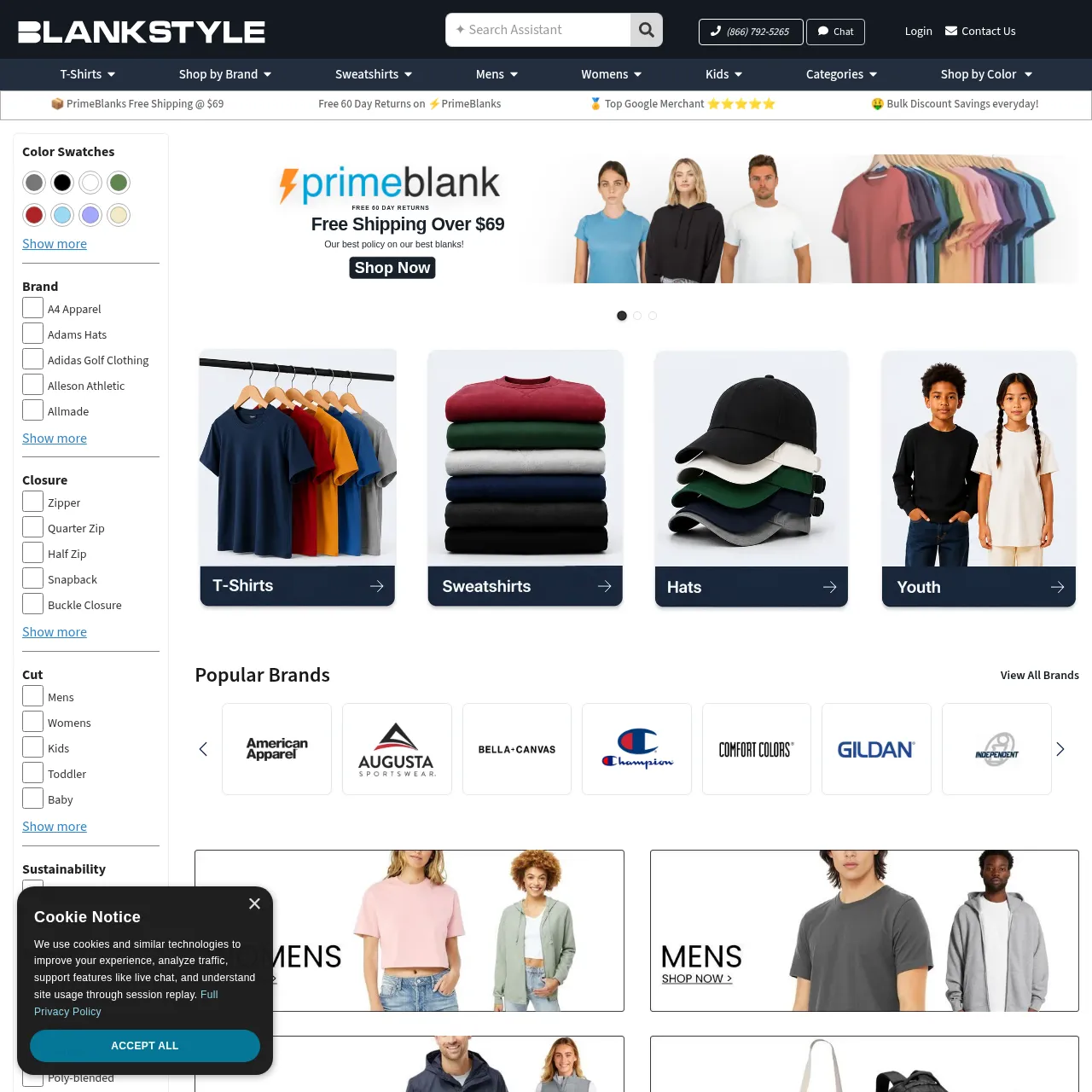 Blankstyle's categorized inventory layout demonstrating precise manufacturing attribute filters.
Blankstyle operates as a digital platform specializing in blank apparel for printing and branding. For overseas sourcing buyers and DTC operators evaluating Chinese supply chains, this page demonstrates effective catalog architecture. Rather than listing generic marketing copy, Blankstyle organizes its inventory by precise manufacturing attributes—such as pigment dye processes, fabric weight (heavyweight vs. low-cost), blend composition (poly-blend), and construction details (tagless, baby cut). While the extracted content lacks concrete supply chain data like specific factory names, MOQs, lead times, or certifications (e.g., ISO 9001, OEKO-TEX, BSCI) typically required by international buyers vetting Chinese manufacturers via platforms like Inbox or 链上科技, its categorical depth serves as a structural benchmark.
Key Features:
- Attribute-Based Taxonomy: Extensive categorized catalog of blank apparel including T-shirts, crop tops, crew necks, and heavyweight tees, sorted by cut, weight, demographic, and dye process.
- Shop-by-Brand Functionality: Allows buyers to filter wholesale inventory by specific apparel manufacturers, streamlining the identification of preferred mill outputs.
- Specialty Garment Categories: Dedicated sections for pigment dyed, tagless, poly-blend, and ready-for-tie-dye blanks, catering to specific customization workflows.
DTC operators use this type of inventory portal to quickly identify exact blank SKUs for custom branding. The direct B2B infrastructure includes dedicated phone support and live chat, facilitating bulk order negotiations typical of wholesale operations. Sourcing professionals can analyze this competitor's taxonomy to understand how Western buyers navigate product listings. This highlights the necessity for Chinese suppliers to pair deep categorization with transparent factory-level data, strict MOQ parameters, and verified compliance certifications to compete effectively in global trade.
Best For: DTC operators using the site structure to source specific blank garments (e.g., heavyweight or tagless) for custom branding and printing before retail fulfillment. It also serves overseas sourcing buyers evaluating US-market taxonomy to benchmark against Chinese supply platforms when structuring their own MOQ tiers, lead-time matrices, and factory certification displays.
4. Faire Wholesale Marketplace (Women's Apparel Category)
 Faire's searchable digital catalog directory aggregating thousands of finished-goods brands.
Faire operates as a dominant digital alternative to traditional B2B directories, directly relevant to overseas sourcing buyers and DTC operators evaluating supply chains. Rather than distributing static PDF line sheets or print catalogs, Faire aggregates over 100,000 brands into a dynamic, searchable online marketplace. For DTC operators, this functions as a centralized hub where buyers can filter by subcategories like Women's Apparel, view real-time inventory, and execute orders without negotiating individual factory MOQs or lead times. Note that while your team evaluates Chinese supply—where direct factory sourcing typically requires verifying specific manufacturing processes (e.g., cut-and-sew, CMT), MOQs (often 300-500 pcs/style for standard woven garments), lead times (45-60 days post-PPS approval), and certifications (BSCI, WRAP, OEKO-TEX)—Faire abstracts these details entirely.
Key Features:
- Massive Brand Aggregation: Digital platform hosting over 100,000 brands across multiple categories, eliminating the need to source individual line sheets from disparate suppliers.
- Self-Service Portals: Dedicated buyer and seller onboarding interfaces ('Sign up to buy', 'Sign up to sell') replace traditional PDF/print catalogs with automated procurement flows.
- Segmented Navigation: Category directories segmented into Women, Men, Kids & Baby, and Home Decor function as a searchable database.
It primarily hosts finished-goods brands rather than raw OEM/ODM factories like those found via 链上科技 or direct Canton Fair contacts. Therefore, while Faire excels as a modern procurement platform for rapid inventory purchasing, buyers seeking custom Chinese manufacturing must still rely on direct factory audits and technical spec sheets rather than aggregator platforms. The streamlined digital UX removes friction associated with legacy ordering processes, making it a powerful tool for ready-made goods.
Best For: DTC operators using Faire's digital interface as a modern replacement for traditional print materials to discover and purchase women's apparel inventory. It suits overseas sourcing buyers evaluating Western-market ready-made apparel brands for retail distribution without relying on static documents.
5. ShirtSpace Wholesale Blank Apparel Catalog
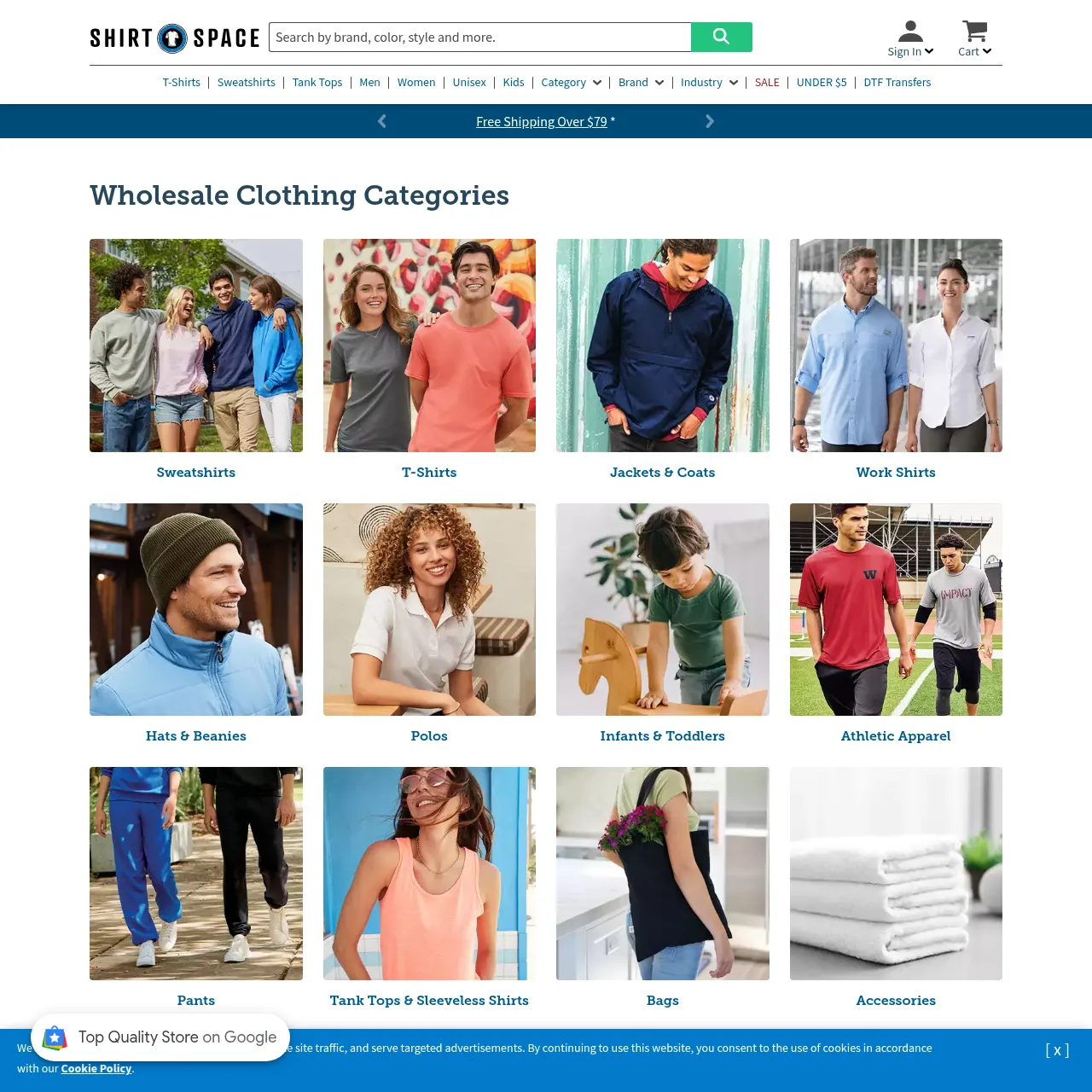 ShirtSpace's interactive digital catalog filtering by garment type and demographic segmentation.
This ShirtSpace categories page serves as a functional, interactive product directory rather than a static document. For overseas sourcing buyers and DTC operators evaluating Chinese supply, this page holds value primarily as a competitive benchmarking tool rather than a direct sourcing channel. The taxonomy—segmenting blanks by cut (Men, Women, Unisex, Kids) and adjacent categories like Heat Transfer Vinyl—demonstrates the exact categorization standards expected by Western B2B buyers. Because ShirtSpace operates as a US domestic distributor, it does not provide Chinese factory specifics such as OEM/ODM capabilities, MOQ thresholds (typically 500-1000 pcs per color/style for direct Chinese mills), production lead times (usually 30-45 days ex-factory), or compliance certifications (BSCI, WRAP, OEKO-TEX).
Key Features:
- Garment-Type Filtering: Categorized digital interface allowing users to sort by T-Shirts, Sweatshirts, Tank Tops, and other specific blanks.
- Demographic Segmentation: Navigation structured around Men, Women, Unisex, Kids, and Infants & Toddlers for rapid SKU discovery.
- Cross-Category Indexing: Includes non-apparel blanks such as Accessories, Bags, Hats & Beanies, and Heat Transfer Vinyl alongside wearable garments.
DTC operators evaluating Chinese supply should analyze this structure to understand the baseline SKUs they need their Chinese partners to replicate or undercut. The broad category coverage serves as a one-stop-shop for decorators, functioning as an interactive tool that allows rapid SKU discovery without requiring manual PDF downloads. By mapping this breadth, sourcing teams can better define technical packs and request targeted quotations from verified Chinese manufacturers capable of matching these specific blank apparel categories.
Best For: DTC operators and print-on-demand businesses using the site to benchmark US domestic blank pricing, styles, and availability against Chinese direct-factory quotes. It is also utilized by overseas manufacturers analyzing Western UI structures to optimize their own B2B digital storefronts for international buyers.
6. Alanic Global Wholesale Clothing Manufacturing & Catalog Services
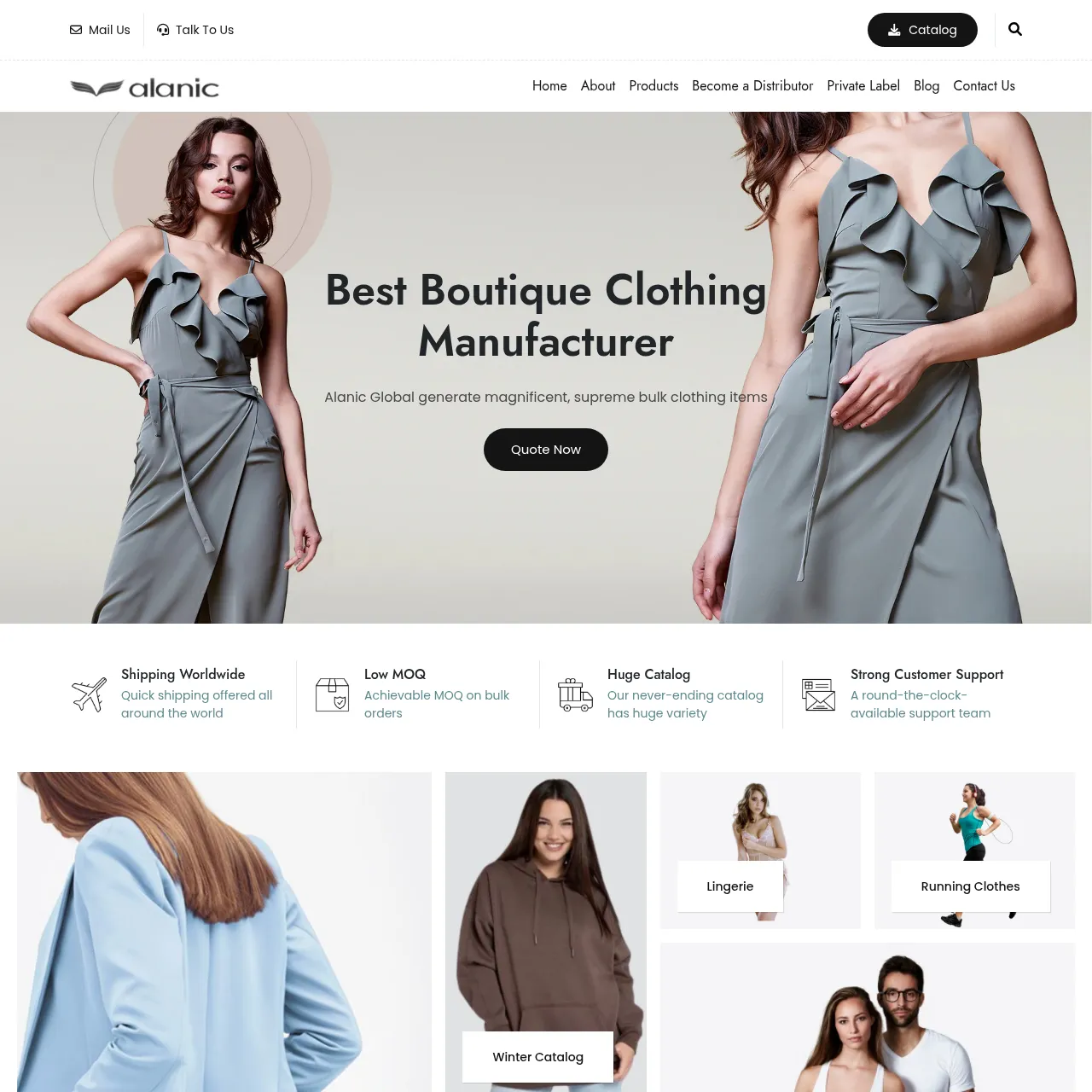 Alanic Global's portal offering downloadable wholesale clothing catalogs and private label services.
Alanic Global is a wholesale clothing manufacturer that directly targets B2B search intent by offering a dedicated, downloadable catalog portal (/catalog-download/). For overseas sourcing buyers and DTC operators currently evaluating Chinese supply chains, this page serves as a competitive benchmark. While the provided excerpt lacks concrete operational metrics—such as specific factory locations, exact MOQs, production lead times, or compliance certifications like BSCI, WRAP, or ISO 9001—the explicit download feature is highly relevant. Sourcing professionals rely on these materials to quickly assess product breadth, material specifications, and baseline pricing structures before initiating RFQs.
Key Features:
- Downloadable Catalog Portal: Direct access to product information via a specific URL path, streamlining the evaluation process for overseas buyers.
- Private Label Capabilities: End-to-end custom clothing manufacturing workflow taking projects from concept to creation.
- Bulk Supply Infrastructure: USA-targeted wholesale operations supporting large-scale apparel procurement.
Alanic positions itself as an end-to-end partner handling private label and custom manufacturing. Buyers comparing this US-focused supplier against Chinese manufacturers should use the downloaded files to cross-reference garment construction processes, fabric sourcing transparency, and scalability. Full-spectrum production support reduces the need to coordinate multiple vendors. Ultimately, this competitor captures high-intent traffic, though serious procurement teams will need to contact them directly via the provided email ([email protected]) to extract the hard data required for final vendor selection.
Best For: Overseas sourcing buyers downloading materials to benchmark MOQs, lead times, and product ranges against Chinese factory alternatives. It is also suitable for DTC operators evaluating bulk apparel suppliers and requesting documentation to verify production capabilities before committing to a manufacturer.
Evaluating B2B sourcing platforms requires moving beyond surface-level aesthetics to scrutinize the underlying supply chain mechanics. Platforms like Royal Apparel, Blankstyle, ShirtSpace, Faire, and Alanic Global offer valuable benchmarks for catalog architecture, SKU organization, and domestic fulfillment speeds. However, for overseas buyers and DTC operators whose business models depend on scalable, cost-effective manufacturing, accessing verified Chinese factories remains essential. Static directories rarely disclose the critical procurement criteria needed for bulk orders: confirmed MOQs, reactive dyeing capabilities, cut-and-sew lead times, and active BSCI or WRAP compliance certificates. If your procurement strategy requires exploring different channels beyond standard directories, reviewing wholesale apparel catalog alternatives can help identify the most efficient sourcing methods for your specific volume needs.
A dependable sourcing partner bridges this gap. Instead of gambling on unvetted marketplace listings, working with a managed export operator ensures that factory shortlists are checked, prices and MOQs are negotiated, physical samples are coordinated, and repeat orders are handled systematically. For Chinese factory owners, commission-only managed storefronts built across multiple locales—with native keyword research rather than basic translation—provide a viable path to selling overseas without the overhead of an internal export sales team.
If you are ready to move past static directories and start evaluating verified manufacturing partners based on actual production capabilities, request a quote or initiate your supplier shortlist today. Visit https://link4a.com to get MOQ and pricing details, coordinate physical samples, or list your factory catalog for global buyers.