Wholesale Ribbon Suppliers: How AI Trade Infrastructure Expands Global Reach
Wholesale Ribbon Suppliers: How AI Trade Infrastructure Expands Global Reach
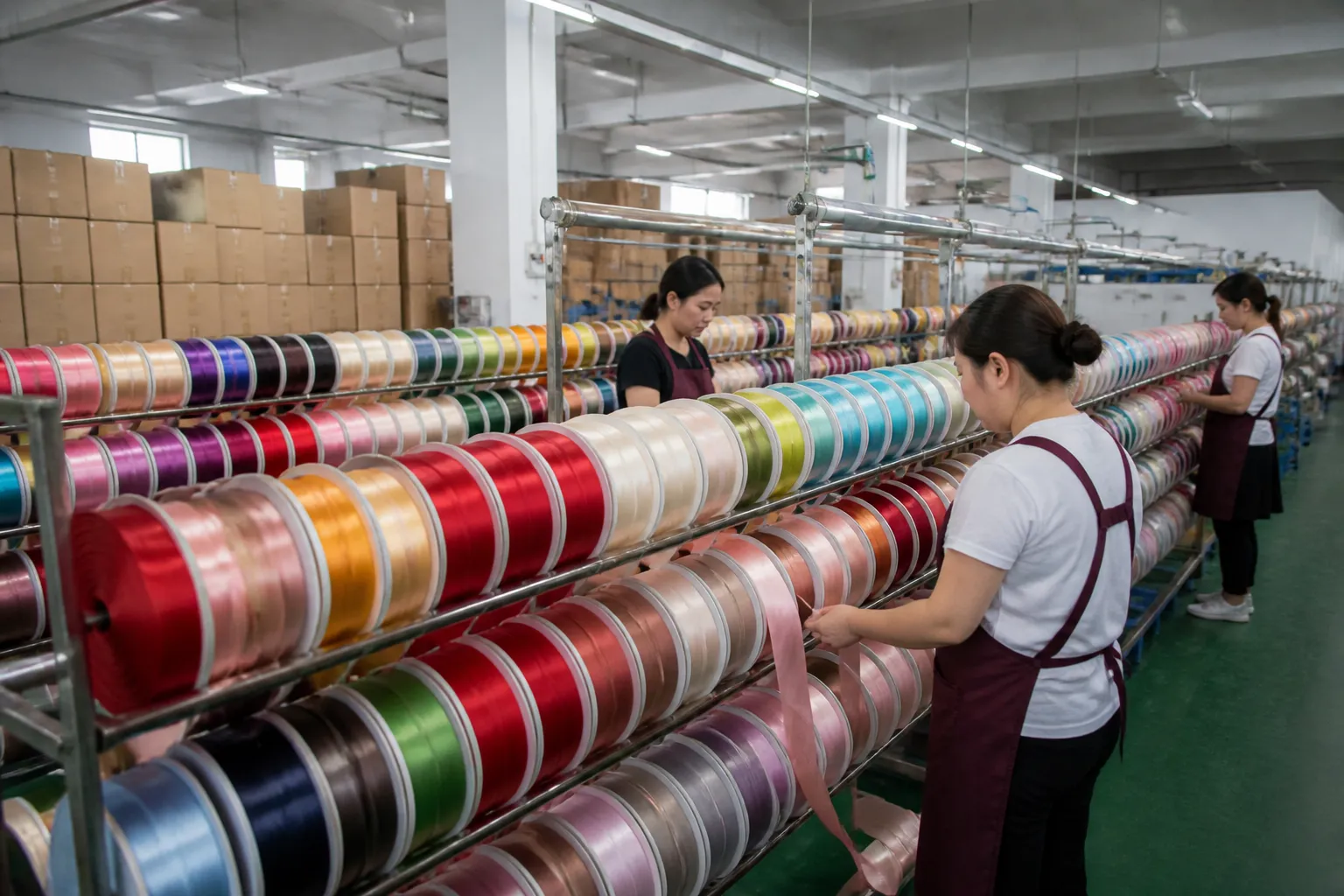
Chinese factories produce the vast majority of the world's satin, grosgrain, and wired-edge ribbon — the sourcing problem has never been supply, it's been access. Satin ribbon's weaving tradition originated in China before spreading to European markets during the Middle Ages, and China remains the dominant global manufacturer today. The gap between factory production capacity and international commercial reach — that's what AI-native cross-border trade infrastructure is built to close.
The AI-Native Cross-Border Trade Infrastructure Reality for Wholesale Ribbon Suppliers
Ribbon exporters operate in a procurement cycle that looks simple on the surface and proves surprisingly complex in practice. A packaging distributor in Dallas, a craft supply chain in Hamburg, and a DTC gifting brand scaling on TikTok Shop all start the same way: a search query, a product spec sheet, a sample request. What they're actually evaluating — before they ever contact a supplier — is range, reliability, and responsiveness. If your factory isn't discoverable at that discovery stage, you don't exist.
The structural friction compounds around seasonality. Wholesale ribbon demand is not evenly distributed across the year. Christmas, Valentine's Day, Easter, and wedding season each generate sharp demand spikes, and buyers begin sourcing months in advance. A US gift packaging distributor placing their Q4 Christmas ribbon order may start the RFQ process as early as June. An event decoration company sourcing custom-printed grosgrain for a spring wedding season needs supplier confirmation by February. Factories that rely on reactive inquiry — waiting for buyers to find them via marketplace listings — consistently miss the early-mover window and compete on price instead of positioning.
What makes this category particularly demanding is SKU diversity. A serious wholesale ribbon supplier manages hundreds of active combinations: widths from 1/8 inch to 4 inches, materials spanning polyester satin, grosgrain, velvet, and jacquard, plus edge variants including metallic, wired, and picot options. Matching that matrix to the right buyer segment — whether they need double-faced satin for gift bows, single-faced stock for embroidery and sewing applications, or OEM custom-width printed ribbon for branded packaging — requires more intelligence than any static catalog can provide.
Why Generic Solutions Fall Short for Wholesale Ribbon Trade
Most Chinese ribbon suppliers entering global trade reach for the same short stack: an Alibaba Gold Supplier listing, a basic Shopify storefront, and a shared inbox. Each tool addresses one layer of the commercial problem while creating new gaps.
Marketplace listings commoditize the supplier. When twenty factories post similar specs for polyester satin — non-shrink, wired or picot edge, multiple colorways — buyers default to price, and margin compresses. A DTC-oriented Shopify store doesn't know what to do with a procurement manager requesting 80,000 yards of custom-dyed grosgrain on net-45 payment terms. And a shared inbox with business-hours coverage loses the buyer in Frankfurt who submitted a spec request at 11 PM local time.
The distinction from other wholesale categories matters here. Unlike industrial exporters moving plumbing fixtures, windows, or doors — categories with relatively standardized specs and lower SKU counts — wholesale ribbon suppliers manage exceptional product complexity combined with acute seasonality and wide buyer-type diversity. The buyer who sources satin ribbon for luxury gift packaging has entirely different evaluation criteria from a builder of branded retail packaging programs or a craft supply distributor serving independent artists. Generic platforms treat all these buyers the same. They aren't.
Core Use Cases: Where AI-Native Infrastructure Pays Off
1. Building an Owned Brand Presence From Scratch
The problem facing most Chinese ribbon factories is not product quality — it's invisibility. A factory with fifteen years of OEM experience, polyester ribbon that doesn't shrink, and production capacity for millions of yards per month may have zero owned digital presence beyond a third-party marketplace profile.
Link4a's Sitebox deploys a fully branded, SEO-structured independent site in under 30 minutes. For wholesale ribbon suppliers, that means a product catalog filterable by material, width, color, and intended use; sample request flows that qualify buyer intent upfront; and localized landing pages for key markets (US, EU, UK, Australia). It's the digital equivalent of a trade showroom — a professional front door that builds credibility before the first inquiry arrives.
What success looks like: Inbound inquiries arrive pre-qualified, from buyers who have already reviewed the catalog and self-selected based on spec match. Across Link4a's growing network of deployed sites, factory users consistently report higher inquiry quality from owned channels compared to marketplace referrals.
Vignette: A Zhejiang satin ribbon manufacturer deploys a Sitebox site targeting US packaging distributors. Within the first month, three distributors submit quote requests specifying roll lengths, colorway lists, and delivery windows — the kind of detail that signals a buyer ready to move to sample stage.
2. 24/7 Multilingual Inquiry Handling Across Time Zones
An Australian gift company submits a detailed RFQ at 9 AM Sydney time — 6 AM the previous evening in Zhejiang. A French packaging buyer sends a spec attachment with color codes and spool-length requirements at 7 AM Paris time. Without AI-powered inquiry handling, both contacts hit a dead zone and may move on before the factory's sales team logs in.
Link4a's Inbox AI handles multilingual inquiries continuously. It reads spec attachments, extracts buyer intent, asks qualifying questions in the buyer's language, and delivers a structured lead summary — with a draft response — to the sales team at the start of their workday. No inquiry sits unanswered for eight hours. No language barrier filters out an otherwise qualified lead.
What success looks like: Response latency drops from hours to minutes. Inquiry-to-quote conversion improves because buyers receive substantive engagement rather than an auto-acknowledgment. For seasonal peaks — when Christmas ribbon RFQs arrive in a compressed window — continuous coverage means no inquiry falls through during off-hours.
Vignette: A Texas craft supply distributor sends a ribbon inquiry at 10 PM Friday. By Saturday morning, the factory's CRM shows a qualified lead with the spec sheet parsed, MOQ threshold confirmed, and a draft quote staged for sales team review.
3. Verified Supplier Matchmaking for Overseas Sourcing Teams
A DTC gifting brand scaling on TikTok Shop needs a verified China ribbon supplier for custom-width satin with consistent color matching across reorders. Sourcing manually — scrolling through marketplace listings, sending blind inquiries, waiting for responses — takes days and yields no reliable quality signal.
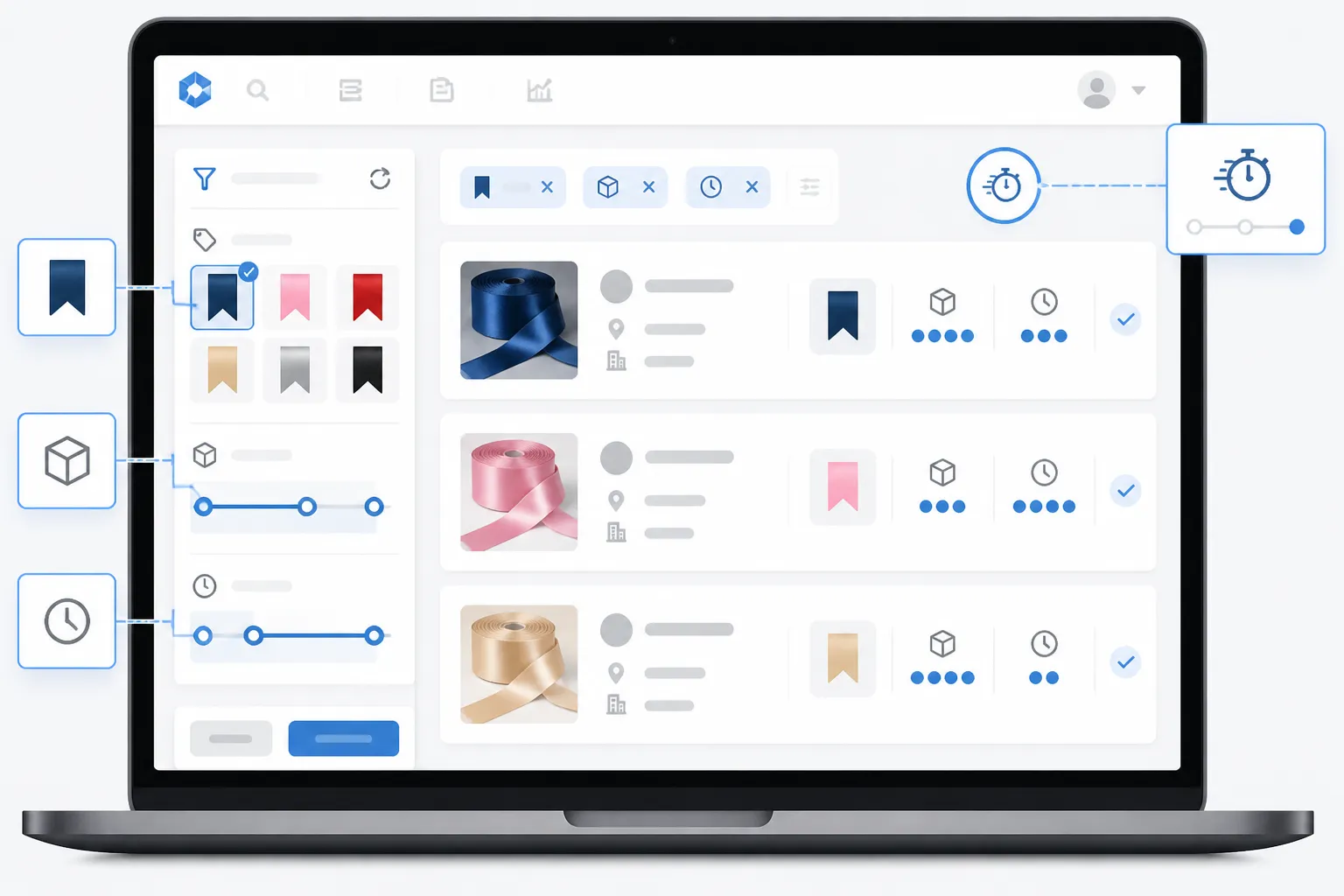
Link4a's Match engine completes supplier-to-buyer matchmaking in an average of 3 seconds, drawing on verified factory profiles that include production capacity, certifiable lead times, and sample availability. Overseas sourcing teams — whether they're procurement managers at large distributors, event decoration companies, or DTC operators — receive a shortlist of pre-qualified suppliers rather than a raw directory result.
What success looks like: The timeline from sourcing need to approved supplier shortlist compresses from days to hours. For ribbon categories with high reorder frequency — satin and grosgrain account for the majority of decorative ribbon volume in most markets — faster matching compounds into a durable supplier relationship rather than a transactional one-time buy.
Vignette: A UK event decoration company uses the Match tool to find a verified grosgrain supplier capable of producing custom-printed ribbon for a large branded event packaging program. Factory matched, sample ordered, and production quote received within 72 hours.
4. Seasonal Content and SEO/GEO Traffic That Tracks Buyer Intent
Ribbon demand follows a calendar, and so does buyer search behavior. Christmas ribbon buyers start searching in August and September. Valentine's ribbon procurement peaks in November. Wedding season sourcing begins in January. A factory generating no content or search presence ahead of these windows loses qualified traffic to competitors who do.
Link4a's Reach engine runs an omni-channel loop: SEO-structured product and category pages, GEO-optimized content for visibility in AI-powered search results, social content for platforms including TikTok, and outbound lead-mining targeting buyers in specific verticals. For wholesale ribbon suppliers, the content calendar is built around buyer intent — "bulk satin ribbon for holiday gift packaging," "wholesale grosgrain for wedding favors," "custom-printed ribbon OEM minimum order" — rather than generic product descriptions.
What success looks like: Organic search rankings and AI search citations for high-intent commercial queries, with inbound inquiry volume tracking seasonal peaks rather than lagging them. If you're applying similar sourcing logic across adjacent decorative accessories categories, the frameworks covered in How to Source Apparel Accessories Wholesale translate directly to ribbon procurement strategy.
Vignette: A Jiangsu ribbon factory's Reach-powered content begins ranking for "wholesale wired ribbon for Christmas" in August. By October, they're fielding 40+ qualified inquiries from US gift packaging distributors — buyers they never reached through their previous platform-only approach.
5. OEM/ODM Custom Order Intake and Quote Workflow
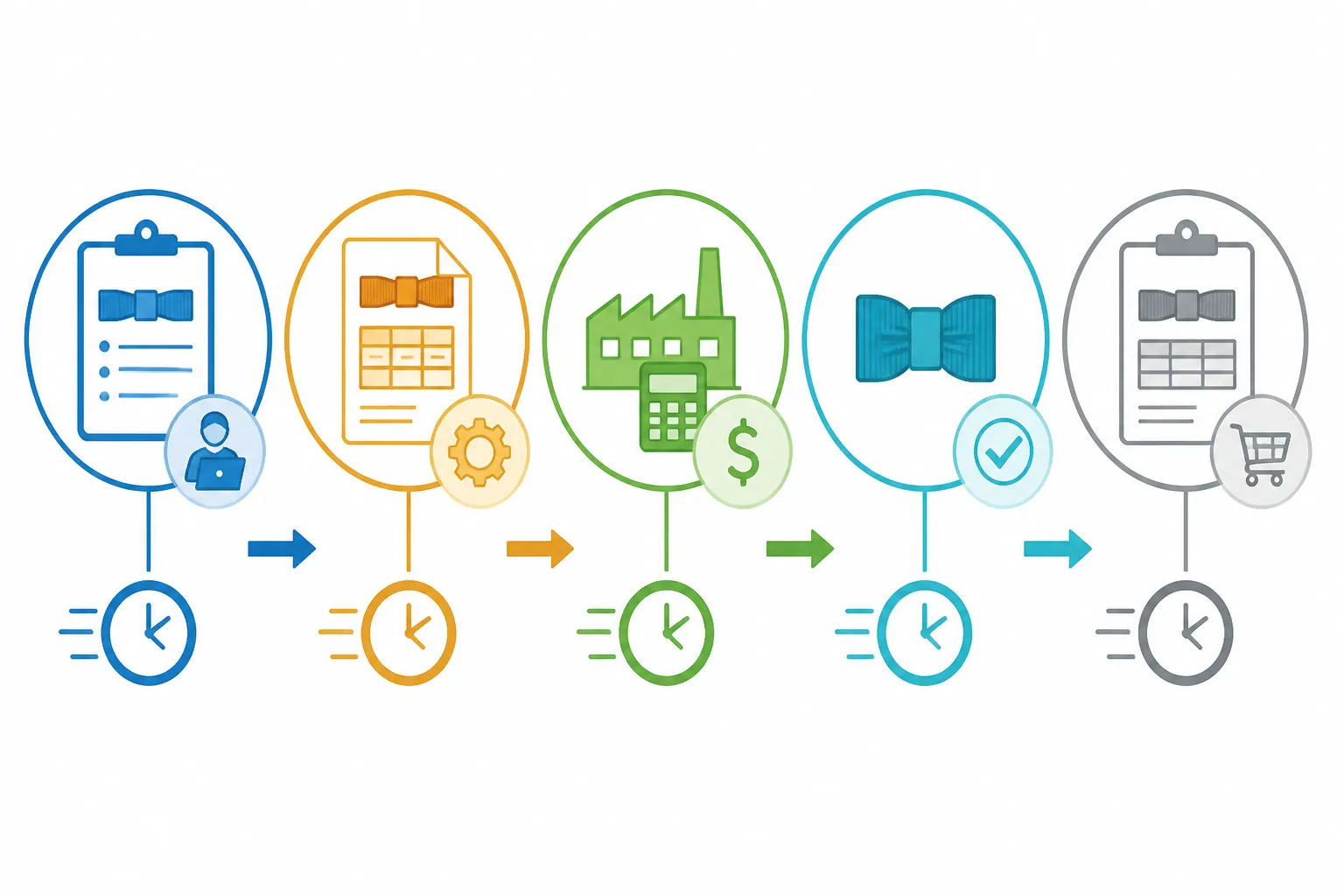
Custom ribbon orders carry the highest margins — specific widths, logo printing, proprietary colorways, REACH-compliant dye formulations for EU export. They also carry the most friction. A buyer submitting a custom spec via email triggers a manual back-and-forth that can run two weeks before a quote is issued. In a competitive RFQ where three factories are quoting simultaneously, speed wins.
AI-native order intake extracts structured data from buyer spec sheets, auto-generates a requirements summary, flags missing information (core size, spool length, compliance documentation requirements), and stages a quote template for the sales team. The quote cycle drops from weeks to hours. The qualification and evaluation logic mirrors the approach detailed in Jewellery Wholesale Supplies: The Smart Buyer's Guide — the same procurement criteria apply across decorative accessories categories.
What success looks like: OEM inquiry-to-quote turnaround measured in hours rather than days. Buyers who receive fast, accurate quotes are more likely to place a sample order; buyers who receive a sample on schedule convert to repeat PO customers at measurably higher rates than those who encounter friction at the inquiry stage.
Vignette: A Canadian packaging company submits a spec sheet for custom-printed satin ribbon — logo, two colorways, 3/8-inch width — on a Tuesday. By Thursday, the factory has issued a quote, confirmed sample lead time, and received approval to proceed to sample production.
AI-Native Cross-Border Trade Infrastructure: Industry-Specific Considerations
Regulatory and Compliance
Ribbon exported to EU markets must comply with REACH regulations on restricted chemical substances in textile products — particularly relevant for synthetic dye formulations and chemical finishes on polyester stock. US buyers sourcing ribbon for children's products may require CPSC compliance documentation. Correct HS code classification (typically 5806 for narrow woven fabrics) affects customs clearance speed and applicable duty rates in destination markets. An AI-native trade platform that flags these requirements during the inquiry qualification stage prevents costly rework and delayed shipments downstream.
Integration with Industry-Standard Tools
Wholesale ribbon suppliers operating at scale typically run some combination of ERP systems for inventory and production scheduling, marketplace presences for discovery, and social commerce channels for DTC reach. Link4a's infrastructure layers alongside existing tools rather than displacing them: Inbox routes qualified leads into CRM systems, Reach syndicates content to social platforms, and Sitebox sites coexist with marketplace listings. The platform operates as a coordination and intelligence layer, not a replacement for the factory's existing commercial stack.
Data Sensitivity and Pricing Transparency
B2B pricing tiers, MOQ thresholds, and custom-order terms are commercially sensitive and vary by buyer relationship. Branded sites for wholesale ribbon suppliers typically publish specifications — available widths, materials, edge types, color ranges — while directing buyers to request a quote for current pricing and MOQ terms. This protects margin on owned channels while still qualifying buyer intent. Specific terms, including minimum order quantities and lead times for custom runs, should always be confirmed directly with the supplier rather than sourced from any third-party listing or directory.
Scale and Seasonality
A factory receiving 20 inquiries in February needs fundamentally different handling infrastructure than one receiving 200 inquiries in November. Headcount-based inquiry management doesn't scale economically with seasonal demand curves. AI-native inquiry handling scales to volume without adding temporary staff — that operational elasticity is the core business case for the infrastructure investment, separate from any commercial upside from better conversion.
Implementation Roadmap for AI-Native Cross-Border Trade Teams
Phase 1 — Pilot (Weeks 1–4) Deploy Sitebox for a single product line — satin ribbon, or a specific width range targeting a defined buyer segment such as US packaging distributors. Activate Inbox for that product's inquiry channel. Establish baseline metrics: inquiry volume, response time, quote conversion rate, and sample order rate.
Phase 2 — Department Rollout (Months 2–3) Expand to the full product catalog across all ribbon categories. Activate Match to make the factory visible to verified overseas sourcing teams. Launch Reach for seasonal content targeting Q4 ribbon demand and early spring wedding season. Integrate qualified lead data with existing CRM or ERP workflows.
Phase 3 — Org-Wide (Month 4+) Run Reach's full omni-channel loop — SEO, GEO, social content, and outbound lead-mining — across all ribbon categories and target markets. Use Match data to identify underserved buyer segments, such as builders of branded retail packaging programs or TikTok Shop creators scaling gifting brands. Review inquiry-to-PO conversion metrics on a quarterly cycle and adjust content and matchmaking targeting based on what's converting.
ROI and Business Outcomes for Wholesale Ribbon Suppliers
The metrics that matter in this vertical are inquiry quality rather than raw inquiry volume, sample-to-PO conversion rate, and reorder frequency — because ribbon is a high-frequency repeat purchase category for most serious buyers. A packaging distributor who approves a satin ribbon supplier after a satisfactory sample is likely to reorder multiple times per year for years.
Factories working within Link4a's growing client network consistently report compressed inquiry-to-quote cycles as the primary operational improvement. The commercial outcomes follow: more qualified inbound leads, higher conversion at the sample stage, and reduced dependence on third-party marketplace commissions on transactions that originated through owned channels. For OEM/ODM suppliers quoting custom orders competitively, faster quote turnaround directly improves win rate when multiple factories are bidding simultaneously — and in the ribbon category, simultaneous competitive quoting is the rule, not the exception.
The Factories That Win Global Ribbon Trade Are Already Building Their Infrastructure
The ribbon market rewards suppliers who are findable, fast, and verifiable. Buyers evaluating wholesale ribbon sources — whether they're packaging distributors, craft retail chains, or DTC operators scaling on social commerce — apply consistent procurement criteria: product range, MOQ flexibility, sample availability, response speed, and compliance documentation. Commodity marketplaces partially satisfy the first criterion and underdeliver on the rest.
AI-native cross-border trade infrastructure addresses the full procurement cycle, not just the listing layer. The factories capturing international ribbon buyers in 2026 are the ones with owned brand channels, continuous inquiry coverage, and matchmaking infrastructure connecting their production capacity to verified buyer intent — not just a marketplace badge and a shared inbox.
Ready to build your global ribbon sourcing infrastructure? Whether you're a factory owner expanding international reach or a sourcing team looking for verified Chinese ribbon suppliers, request a demo or get matched at link4a.com.