How to Source Women's Custom Jewelry from China: A Buyer's Guide
How to Source Women's Custom Jewelry from China: A Buyer's Guide
Women's custom jewelry encompasses personalized, made-to-order, or branded pieces—ranging from engraved gold pendants to bespoke gemstone rings—manufactured specifically for a buyer's retail line or direct-to-consumer (DTC) store. If you are sourcing these products from China, your primary challenge is not finding a factory; it is finding a vetted manufacturing partner capable of hitting precise quality standards at a viable minimum order quantity (MOQ). For a broader overview of the procurement process, explore our guide on how to source custom jewelry for DTC brands and retailers.
Who This Guide Is For
This guide is built for overseas buyers, importers, DTC store owners, and online creators who need a dependable sourcing partner in China for women's custom jewelry. You are likely moving past the phase of gambling on unvetted marketplace listings and need someone to shortlist factories, verify their capabilities, negotiate pricing and MOQs, coordinate samples, and manage repeat orders. You might be launching a demi-fine collection inspired by the aesthetic of brands like Kendra Scott or David Yurman, or building an affordable charm ecosystem that rivals the market presence of Pandoras. Your trigger is usually one of three things: scaling an existing product line without sacrificing margin, replacing an unreliable supplier who missed a holiday production window, or transitioning from white-label stock to fully custom designs that require multilingual communication with Chinese manufacturers.
What Women's Custom Jewelry Actually Does for Your Business
Sourcing custom women's jewelry allows retailers and brands to control margins, dictate design specifications, and build proprietary inventory that competitors cannot replicate. Unlike buying off-the-shelf stock from platforms like Zales or browsing standard catalogs on CustomMade, true B2B custom sourcing means you own the mold, the plating thickness, and the packaging. It transforms jewelry from a commodity into a brand asset. Whether you are producing permanent jewelry chains designed to be welded on the customer's wrist, or luxury 18k gold vermeil pieces, custom manufacturing aligns the physical product exactly with your brand's price point and target demographic.
Key Decision Factors
Evaluating a supplier for women's custom jewelry requires looking past the product photos. Use these seven factors to assess any factory or sourcing partner before committing capital.
Pricing Model and Margin Protection
What to evaluate: How the supplier structures unit costs, tooling fees, and sample charges. What "good" looks like: Transparent tiered pricing where the per-unit cost drops predictably as volume increases. A reliable partner negotiates directly with the factory floor rather than adding hidden markups. For example, if you are targeting the affordable segment, your landed cost must leave room for marketing spend and retail markup. Some managed export operators work on a commission-only model for factories—charging nothing until an order closes—which often results in better baseline pricing passed to the buyer because the factory isn't paying upfront listing fees.
Minimum Order Quantity (MOQ) Flexibility
What to evaluate: The lowest number of units a factory will produce per SKU, and whether they allow mixed sizes or colors within that MOQ. What "good" looks like: An MOQ that matches your sales velocity. High-end luxury manufacturers may demand hundreds of units per design, while agile DTC-focused factories might accept lower thresholds. A strong sourcing partner will negotiate this down based on your projected lifetime value to the factory, rather than accepting the first number quoted on a platform like Alibaba.
Material Quality and Plating Standards
What to evaluate: Base metals used (e.g., 925 sterling silver vs. brass), gold karatage, plating thickness measured in microns, and stone setting methods. What "good" looks like: Suppliers who provide exact material spec sheets. If you are creating pieces meant to evoke the heavy, architectural feel of David Yurman or the colorful enamel work of Kendra Scott, the factory must prove they can execute specific finishing techniques. Ask for the exact micron thickness of gold plating to ensure longevity, especially for items marketed as demi-fine or luxury.
Factory Vetting and Compliance
What to evaluate: Physical verification of the factory, labor compliance, environmental certifications, and material safety testing (like REACH or California Prop 65 for lead/nickel content). What "good" looks like: A sourcing partner who physically visits the facility rather than relying on digital certificates. They should provide audit reports confirming the factory actually produces the type of women's custom jewelry you need, rather than outsourcing your order to a secondary, unvetted workshop.
Sample Coordination and Lead Times
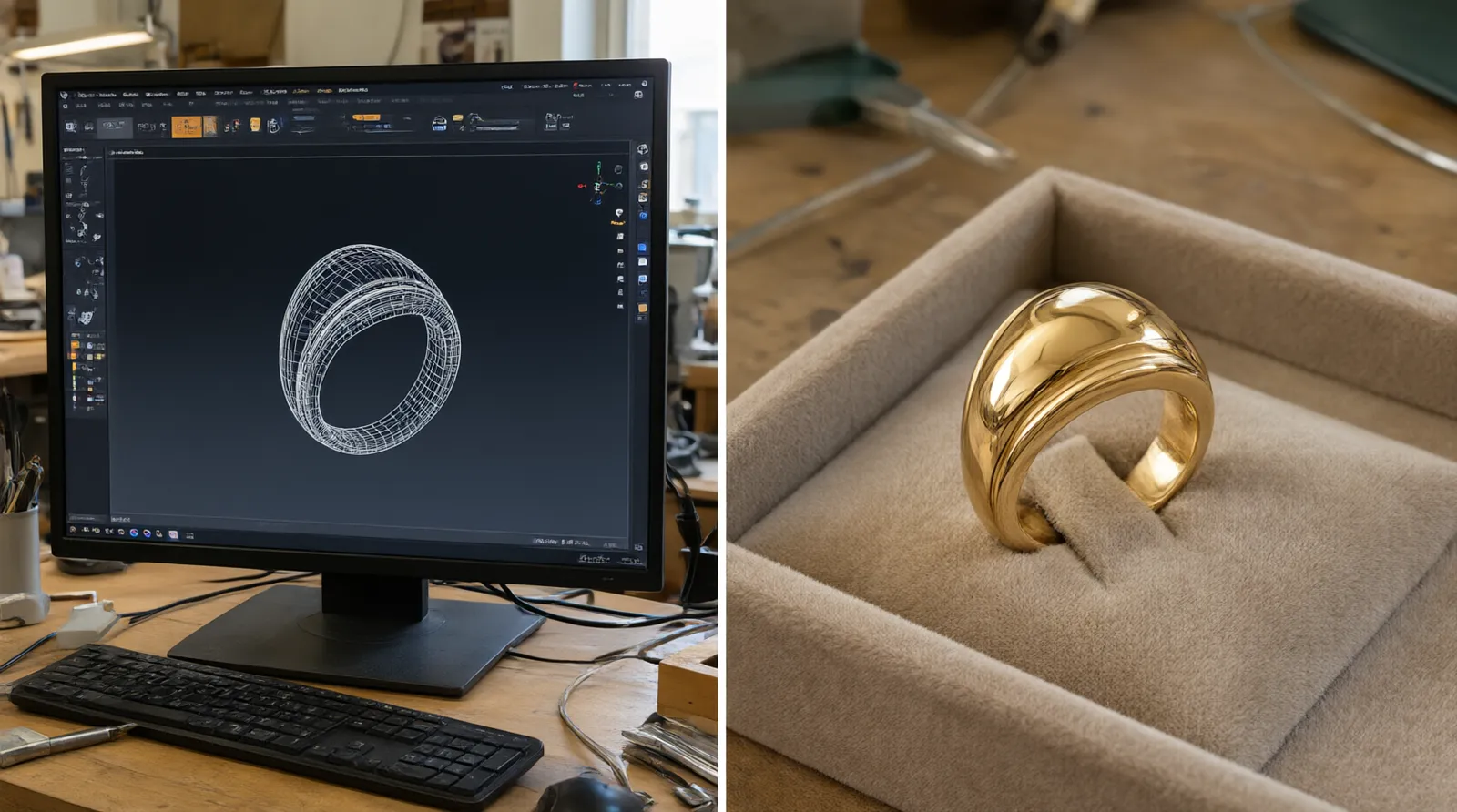
What to evaluate: The time from approved CAD/rendering to physical sample delivery, revision policies, and the cost of prototypes. What "good" looks like: A structured sampling phase where you receive a physical prototype before mass production begins. Factories specializing in intricate items—like permanent jewelry links or complex pavé settings—should offer clear timelines for revisions. Good partners handle the back-and-forth logistics of shipping samples internationally so you aren't managing customs paperwork yourself.
Multilingual Communication and Managed Support
What to evaluate: Language barriers between your team and the Chinese factory floor, and how technical design files are translated. What "good" looks like: A managed export operator that handles conversations in multiple languages. Link4a, for instance, operates storefronts in six locales, including right-to-left Arabic layouts, utilizing per-language keyword research rather than simple English translation. Replies to buyers are drafted from the factory's actual in-stock catalog. This ensures that when you request a specific clasp mechanism or chain gauge, the instruction isn't lost in translation.
Scalability and Repeat Order Management
What to evaluate: The factory's capacity to handle sudden volume spikes (e.g., Q4 holiday rushes) and how easily reorder processes are triggered. What "good" looks like: Documented standard operating procedures for repeat orders. If your initial run of custom gold charms sells out, you need a partner who holds your molds securely and can initiate a restock run immediately without renegotiating terms from scratch.
Budget Tiers
Pricing for women's custom jewelry varies drastically based on materials, complexity, and volume. Use this framework to set expectations when requesting quotes. Note that exact figures depend on current raw material markets and your negotiated terms.
| Tier | Target Buyer | Typical Unit Cost Range | What You Get |
|---|---|---|---|
| Entry / Affordable | Fast-fashion DTC, TikTok Shop creators, promotional buyers | $[X] – $[Y] per unit | Brass or stainless steel base, flash plating, high MOQs, standardized custom elements (e.g., laser-engraved logos on stock shapes). |
| Mid-Market / Demi-Fine | Independent boutiques, established Shopify brands | $[X] – $[Y] per unit | 925 Sterling silver base, thicker gold vermeil plating, custom molds, semi-precious stones, moderate MOQs, dedicated sampling phase. Comparable to the quality tier seen in curated collections on sites like BaubleBar. |
| Enterprise / Luxury | High-end jewelers, multi-national retail chains | $[X] – $[Y]+ per unit | Solid 14k/18k gold or platinum, ethically sourced diamonds/gemstones, strict compliance auditing, low MOQ flexibility for VIP clients, full IP protection. For deeper insights into premium-tier procurement, review our luxury jewelry sourcing guide. |
Note: Request current pricing and MOQ tiers directly from your sourcing partner, as raw metal commodities fluctuate.
Red Flags to Avoid
Walk away from a supplier or sourcing arrangement if you encounter any of the following:
- Refusal to send a pre-production sample: Never authorize a bulk run of custom jewelry based solely on digital renderings or photos.
- Vague material descriptions: If a supplier says "gold color" instead of specifying "18k gold plated over 925 silver with X microns," they are hiding cheap base metals.
- No IP protection agreement: Custom designs are your intellectual property. If the factory refuses to sign a Non-Disclosure Agreement (NDA) or Non-Compete clause preventing them from selling your mold to others, find another vendor.
- Unrealistically fast lead times: Intricate custom work takes time. A factory promising luxury-level craftsmanship in a few days is likely substituting inferior materials or skipping quality control.
- Demanding 100% payment upfront: Standard practice involves a deposit (often 30%) with the balance paid after production but before shipment, ideally following a third-party inspection.
- Inconsistent communication channels: If your contact only communicates via personal messaging apps and refuses official invoicing or email trails, you have no legal recourse if the order fails.
- Ignoring compliance requests: If you ask for nickel-free or lead-free testing documentation for Western markets and the supplier brushes it off, your inventory could be seized at customs.
Buying Process Checklist
Follow this sequence to procure women's custom jewelry systematically, minimizing financial risk.
- Define Requirements: Finalize your CAD files, material specs, target retail price, and required volume. Determine if you need specialized categories like permanent jewelry components or traditional clasped pieces.
- Shortlist Vendors: Do not rely solely on open marketplaces. Engage a sourcing partner like Link4a that pre-vets factories. (For a broader look at vendor types, review our breakdown of key custom jewelry sources for buyers and DTC brands).
- Request Quotes & Compare: Send identical spec sheets to 3-5 shortlisted factories to establish a baseline for unit cost, tooling fees, and lead times.
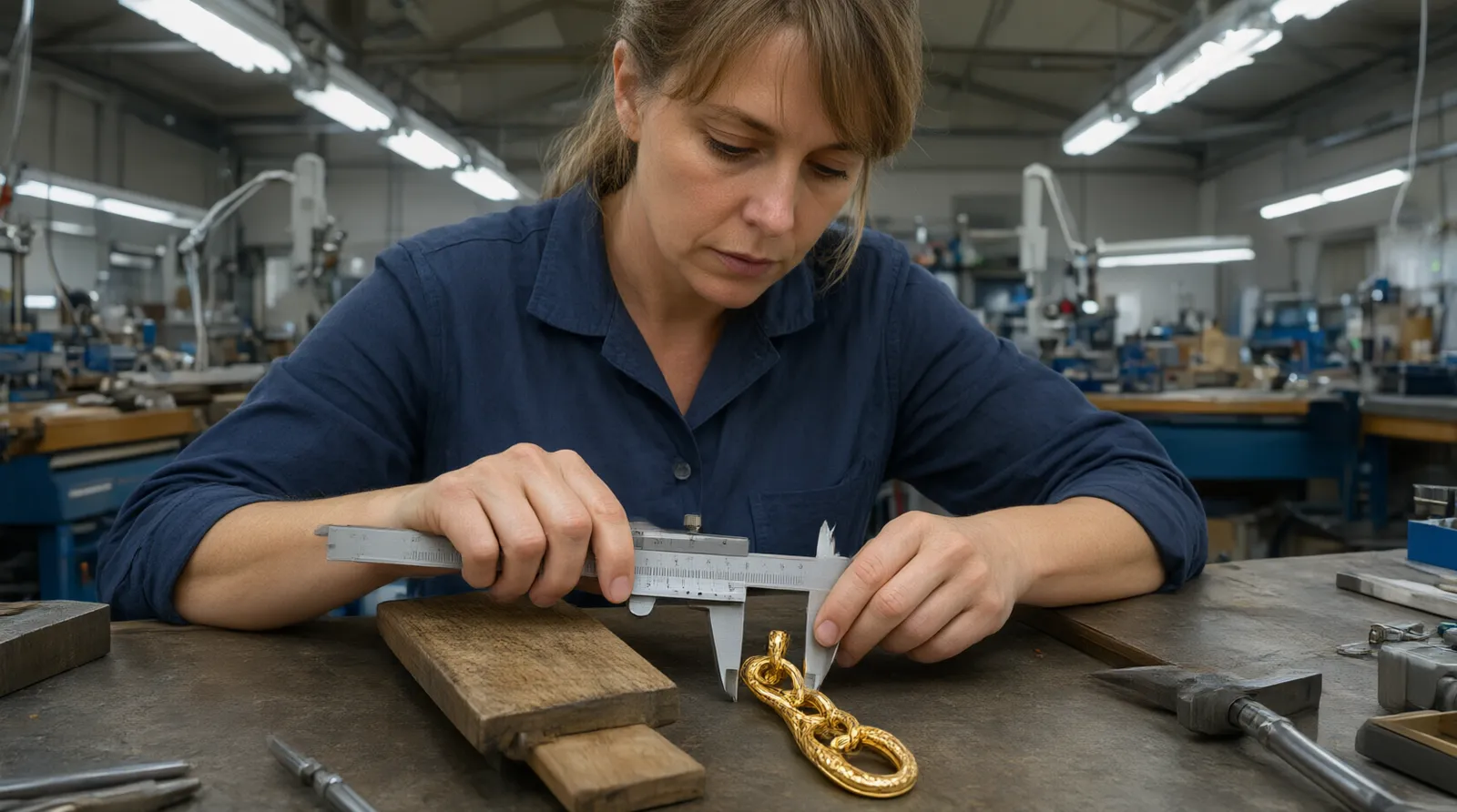
- Coordinate Samples: Pay for a physical prototype. Test it for weight, clasp durability, plating adhesion, and skin sensitivity.
- Conduct Reference Checks: Ask the factory or your sourcing agent for examples of previous export runs to your specific country. We also rank suppliers based on verifiable data in our guide comparing custom jewelry OEM suppliers and retail benchmarks.
- Negotiate Contract: Lock in the MOQ, unit price, payment terms, penalty clauses for delays, and IP ownership.
- Initiate Production & Inspect: Authorize the bulk run. Hire a third-party inspector (or use your managed export partner) to check the goods against your approved sample before they leave China.
- Arrange Logistics: Confirm Incoterms (e.g., FOB, DDP) and ensure all customs documentation accurately reflects the materials used.
Questions to Ask Vendors
Before signing a purchase order, get concrete answers to these questions:
- What is your exact MOQ for this specific design, and does it change if I mix sizes or plating colors?
- Can you provide a detailed material spec sheet, including base metal composition and exact plating micron thickness?
- What is your protocol if the pre-production sample fails my quality review? Are revision costs included?
- How do you protect my custom molds and CAD files from being sold to other buyers?
- Do you hold certifications for lead, nickel, and cadmium compliance required for US/EU import?
- What is your standard lead time from deposit receipt to goods ready for shipping?
- How do you handle communication during production? Will I have a dedicated account manager who speaks my language?
- What are your payment terms for initial orders versus repeat orders?
- If I am working through a managed export operator like Link4a, how is the factory compensated, and does that structure guarantee me better pricing?
- Can you accommodate specialized manufacturing techniques, such as welding loops for permanent jewelry or micro-pavé stone setting?
- What happens if a bulk shipment arrives with a defect rate higher than the agreed-upon tolerance?
- Do you offer warehousing or consolidated shipping if I am ordering multiple SKUs from different production lines?
Recommended Next Steps
Sourcing women's custom jewelry requires precision, verified manufacturing relationships, and strict quality control. Stop relying on unvetted marketplace listings that put your margins and brand reputation at risk. Whether you are an overseas buyer needing a partner to negotiate MOQs and handle factory communications, or a Chinese manufacturer looking to sell your catalog internationally without hiring an export team, the right infrastructure changes your entire business model.
Link4a provides verifiable search visibility improvements for client stores and handles buyer conversations drafted directly from actual in-stock catalogs. Factories enter on a commission-only basis, paying nothing before an order closes.
Stop guessing on supplier reliability. Get MOQ & Pricing or Request a Sample today to connect with vetted manufacturing partners who can execute your custom jewelry vision.